Here’s a conversation we’ve had more times than we can count.
Someone has a specification. They have a test that returns a pass. And the two aren’t actually connected to each other.
It usually starts with a phrase that sounds like it settles the question. The part is liquid tight.
Liquid tight is a real claim
It’s worth saying clearly that liquid tight isn’t marketing language. It’s a genuine, provable property, and a part that has been proven liquid tight has passed a real test.
Water has a comparatively large molecule and high surface tension. It won’t pass through a leak path that a gas moves through easily.
So a component can be liquid tight and not gas tight, and both statements can be true at the same time. That isn’t a contradiction. It’s physics, and it’s the whole reason this matters.
Whether it matters to you depends on your application. If the loop is sealed, if it operates over years without top-up, or if the coolant can migrate as vapour into an electronics enclosure, then it matters a great deal.
The part few people check
A specification gets written with a leak rate in it. Often a tight one, because the consequence of a leak is severe and tightening the number feels like managing the risk.
Then a test method gets chosen, frequently for good reasons: it’s already on site, it’s fast, it’s cheap per part, the operators know it.
And nobody checks whether the second can see the first.
A pressure decay test resolves to around 1.0 x 10⁻² mbar·l/s. Accumulation testing, using helium or hydrogen tracer gas at atmosphere with no vacuum chamber, resolves to around 1.0 x 10⁻³.
If your specification is several orders of magnitude tighter than that, the method isn’t verifying it. It’s returning a pass because it can’t see the leak, which is a different thing entirely.
If your specification is tighter than your method can measure, you don’t have a specification. You have an assumption.
Being fair to the methods
First running a gross test and pressure decay is genuinely useful. It’s quick, it’s robust, it needs no tracer gas, and as a first screen for gross leaks it’s excellent. Screening gross leaks out before a fine leak test protects both your cycle time and your instrument.
It’s genuinely useful. It’s quick, it’s robust, it needs no tracer gas, and as a first screen for gross leaks it’s excellent. Screening gross leaks out before a fine leak test protects both your cycle time and your instrument.
What it can’t do is verify a rate three orders of magnitude below what it resolves. The failure isn’t in the method. It’s in asking the method to do something it was never able to do.
The same fairness applies to accumulation testing, which has real advantages: no vacuum chamber, testing at atmosphere, simpler fixturing. Within its resolution it’s a sound choice.
What changes with helium leak testing in a vacuum
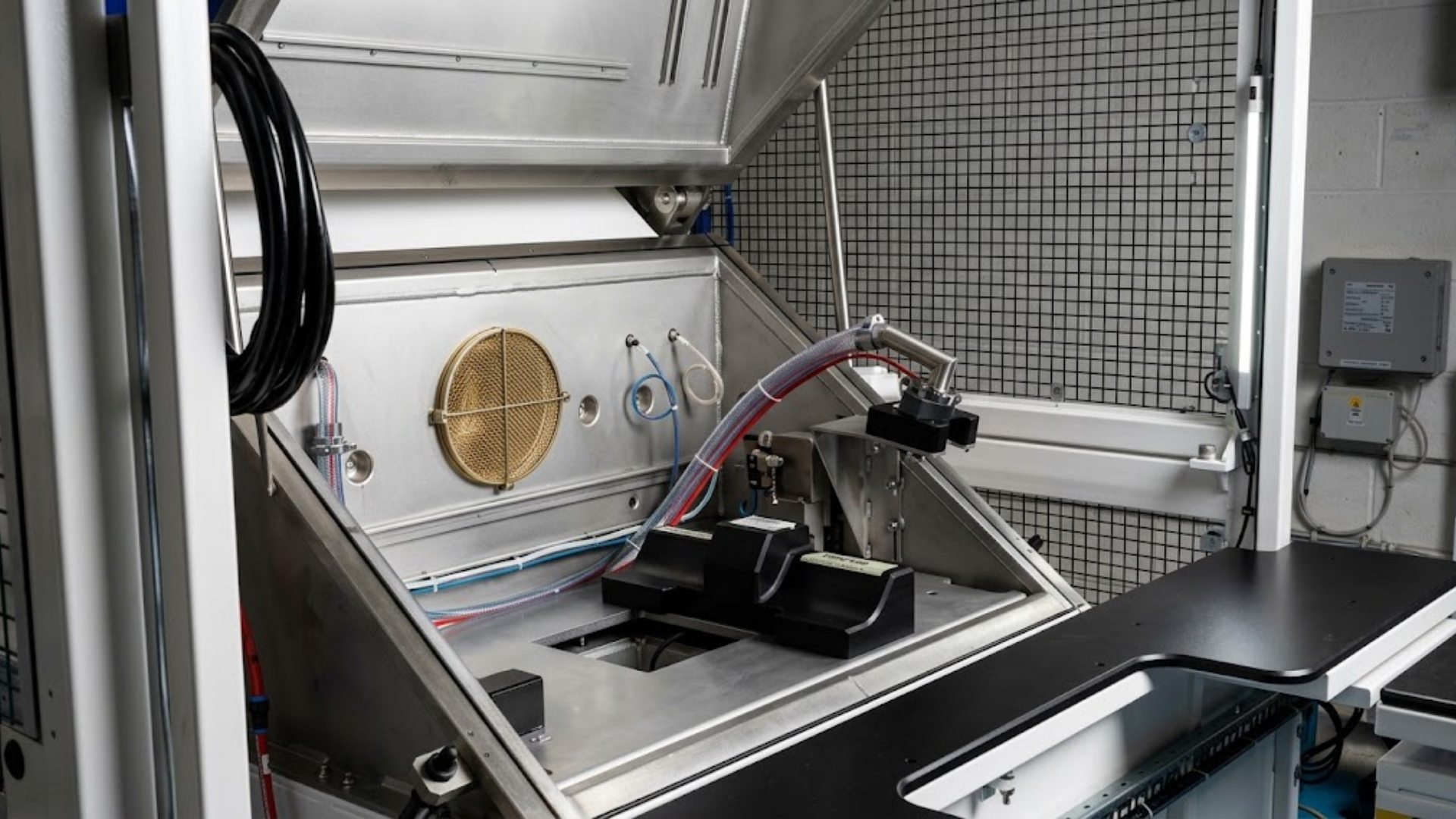
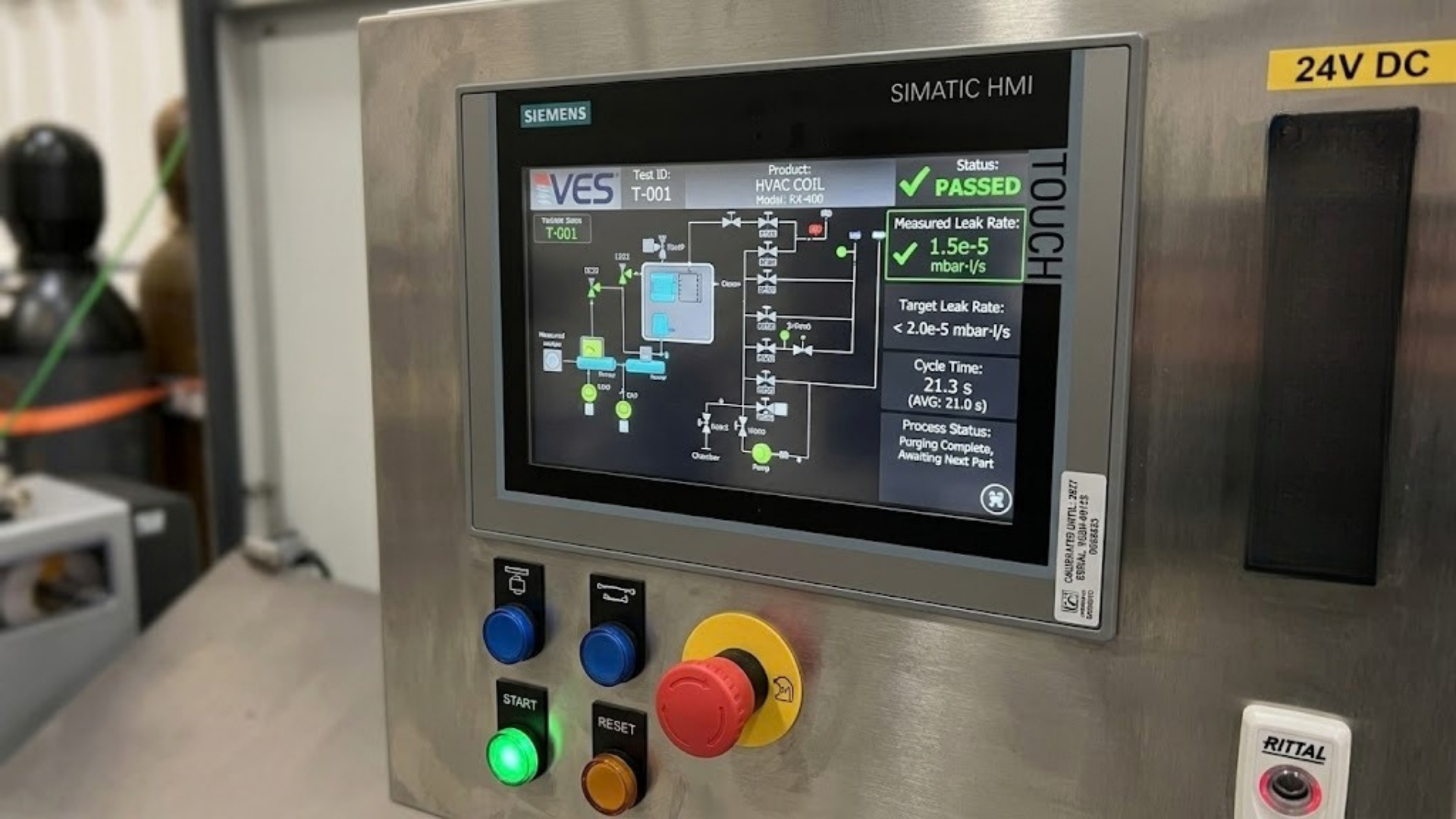
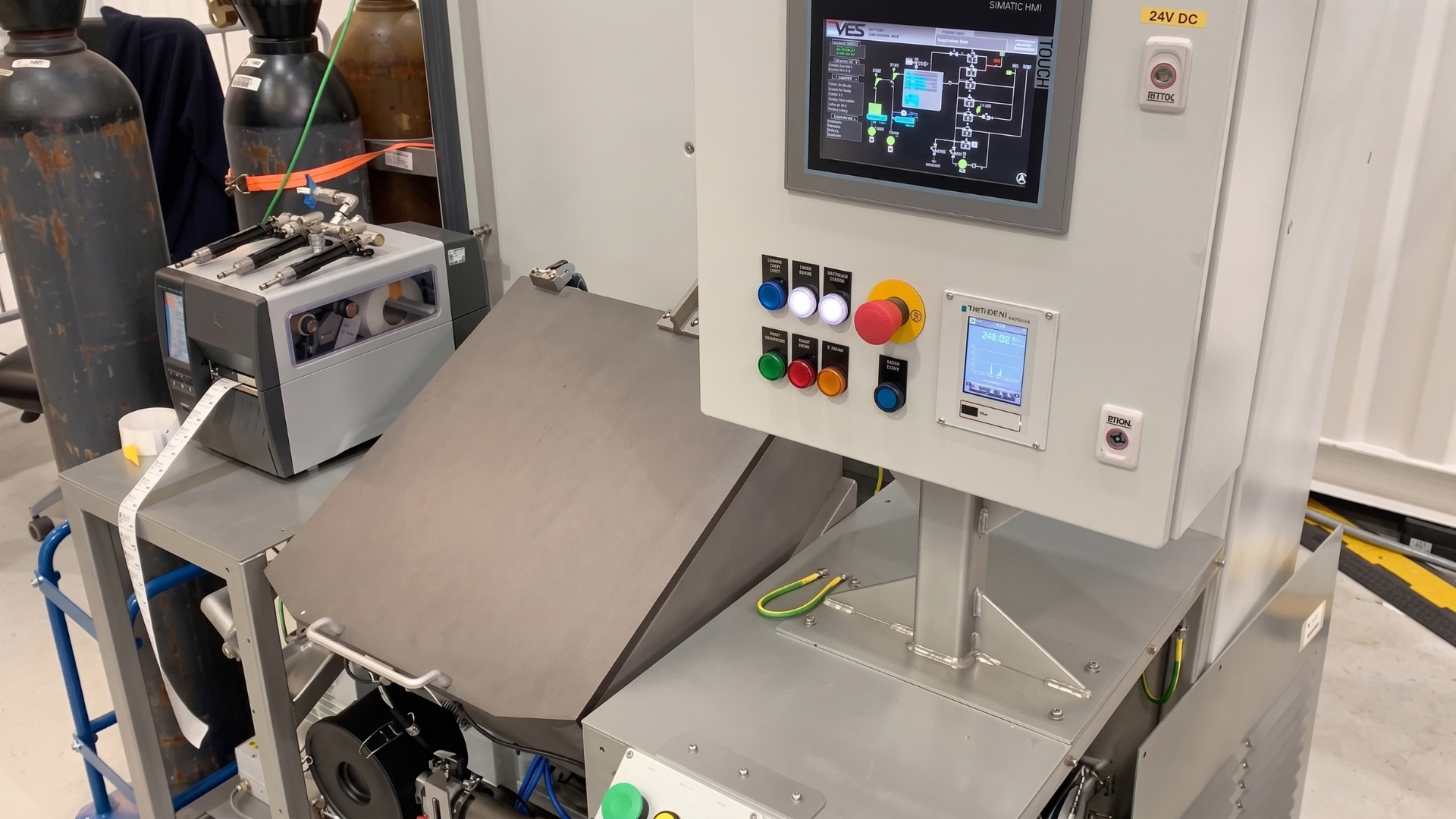
Helium leak testing in a vacuum resolves down to the rates liquid cooling specifications actually call for. On HVAC components our systems take testing to 2.0 x 10⁻⁶ mbar·l/s.
Two things change when the method can see the leak.
The first is that you get a number rather than a verdict. Below the pass-fail limit that value is measured. Above it the test stops, so the value is predicted rather than measured. Either way you have a clear pass-fail result carrying a measured leak rate value, recorded against a serial number.
The second is what that record lets you do later. If a question is raised about a batch two years from now, you can answer it with data rather than with an argument. Sampling can never give you that.
What should you do about it
Before you write the leak rate into a specification, check that your chosen method can resolve it with margin. Not just reach it: resolve it with room to spare, because a method operating at the edge of its sensitivity is a method you’ll be arguing about.
If you’re setting or reviewing a specification, our leak rate calculator is a quick way to convert between units and check that the method and the number actually line up:
https://vac-eng.com/leak-rate-calculator/
And the full guide to leak testing quick disconnect couplings covers where this fits alongside method selection, the two sealed states and tooling: