Most leaks in HVAC heat exchangers start at a brazed joint. Leak testing brazed heat exchangers well means knowing where those joints fail, testing at the point in production where a leak is less costly to deal with, and using a method that proves the whole part rather than the joints someone happened to check.
This article covers the common brazing defects, how tube-and-fin and microchannel heat exchangers differ as a testing problem, and when in production the test does the most good.
For the broader picture of coil test methods and leak rates, see our guide to HVAC coil leak testing.
Where brazed joints fail
A brazed joint can look perfect from the outside and still leak. The usual causes are:
- Porosity and voids in the filler, which leave a path through the joint.
- Incomplete fill, where the filler hasn’t run all the way through the joint gap.
- Flux trapped in the joint, which can hold a joint closed and open a leak path during charging.
- Overheating, which can erode thin tube walls next to the joint.
- Cracking, from thermal stress during brazing or from handling afterwards.
On tube-and-fin coils there’s a further source that has nothing to do with brazing: tubes split or thinned during mechanical expansion into the fins.
Tube-and-fin and microchannel are different problems
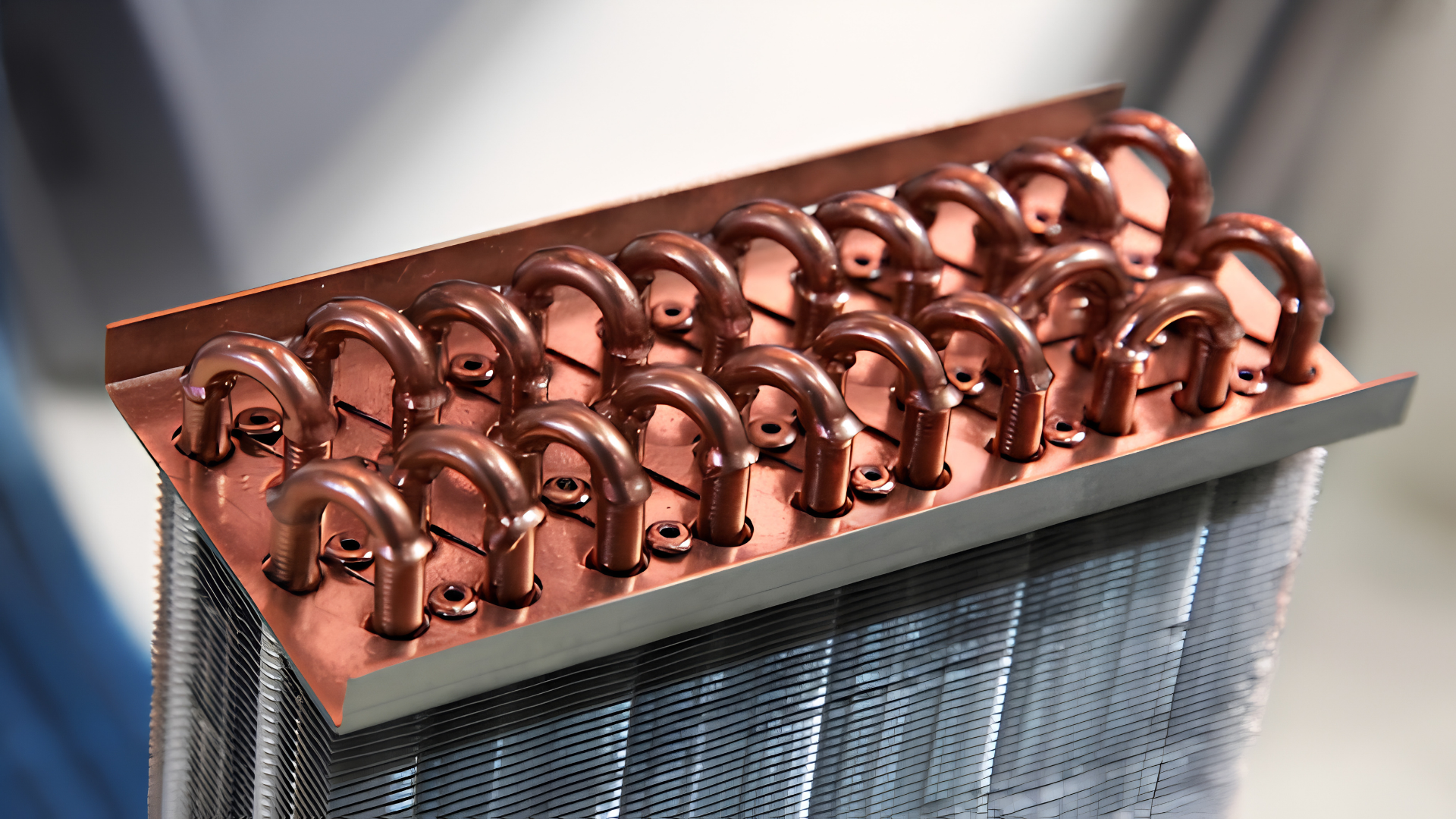
Copper tube-and-fin coils have discrete brazed joints: return bends, header connections, stubs. Each one is a known suspect, and a leaking joint can usually be found and re-brazed. Testing here is about proving the coil and, when it fails, finding the joint quickly so it can be repaired.
Aluminium microchannel heat exchangers are a different proposition. The whole core is brazed in a single furnace pass, with hundreds of tube-to-header joints and thin walls. A leak usually can’t be repaired in production, so it means scrap. The aim shifts from finding and fixing to catching the problem early and keeping the brazing process under control.
With microchannel, the leak test is as much a check on the brazing furnace as on the part. A run of failures in the same header position usually points at the process rather than bad luck, and the sooner the test data shows it, the less scrap you make.
Test where the leak is still cheap
The cheapest place to find a leak in a heat exchanger is straight after brazing, before it’s built into anything. Once it’s in a unit, charged, or worse, installed, the cost of the same leak multiplies.
That usually means testing the heat exchanger on its own after brazing, then testing again at assembly, where the joints that connect it to the rest of the system are made. Each test is proving different joints.
Proving the part, and finding the leak
Two jobs often get confused here, and they need different tools.
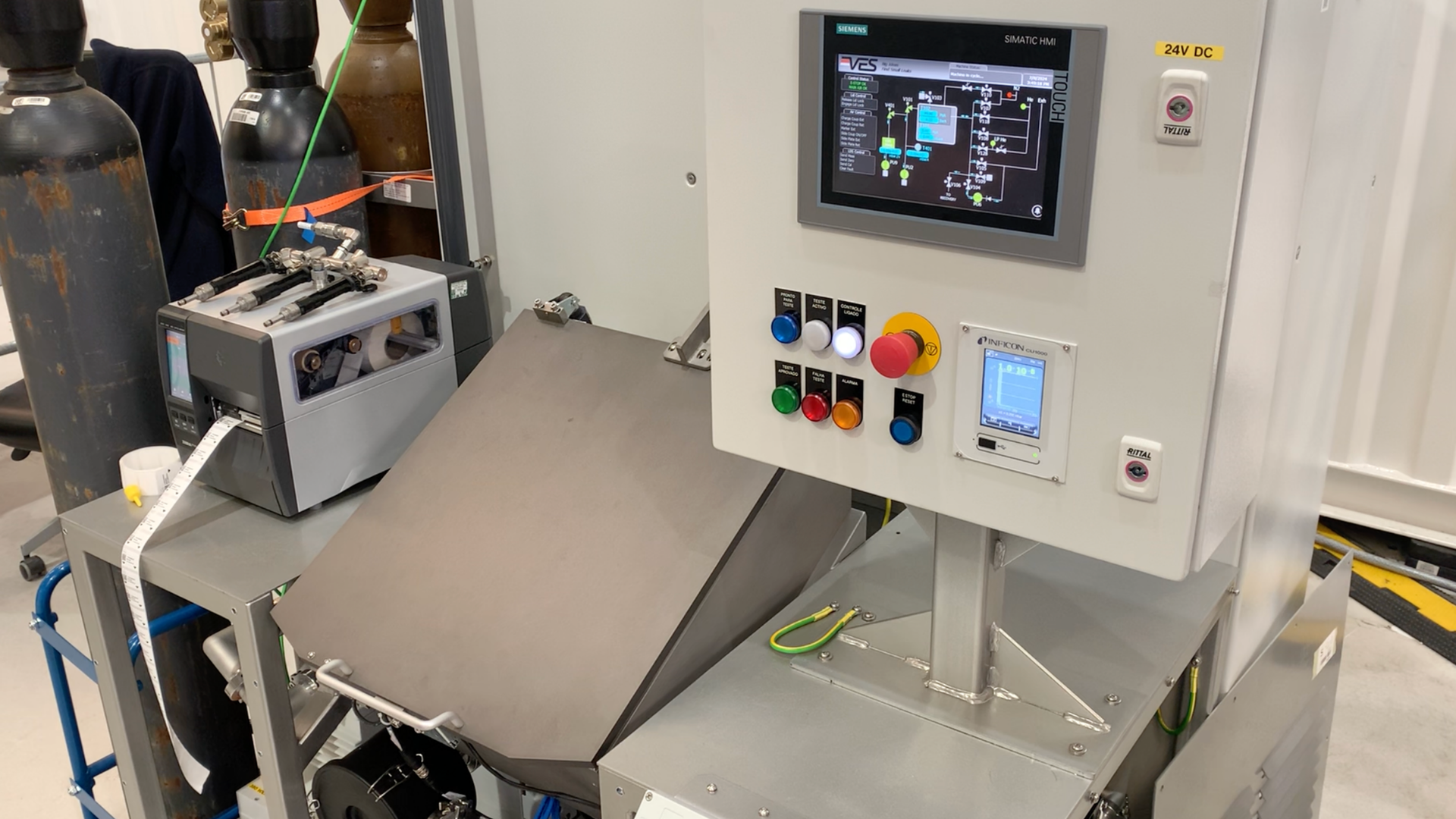
Proving the part means confirming that the whole heat exchanger is tight, every joint at once. That’s a helium vacuum chamber test: the part is charged with helium inside an evacuated chamber, and any helium that escapes from anywhere is measured. On the systems we build, HVAC components are tested down to 2.0 x 10⁻⁶ mbar·L/s, with a clear pass-fail result and a measured leak rate value alongside it.
Finding the leak means locating it so a repairable joint can be re-brazed. That’s what sniffer testing is for. It’s the right tool for the job, and the wrong tool for proving a part, because it only checks the places someone points it at.
Where a full chamber isn’t practical, accumulation testing at atmosphere resolves to around 1.0 x 10⁻³ mbar·L/s. And a gross leak screen at the start of the cycle stops a badly leaking part flooding the chamber with helium and costing a long recovery before the next test.
Size, cycle time and tooling
Heat exchangers can be large, and a large part needs a large chamber. Chamber volume drives evacuation time, which drives cycle time, so the chamber should be sized around the part family rather than the biggest part you might one day make.
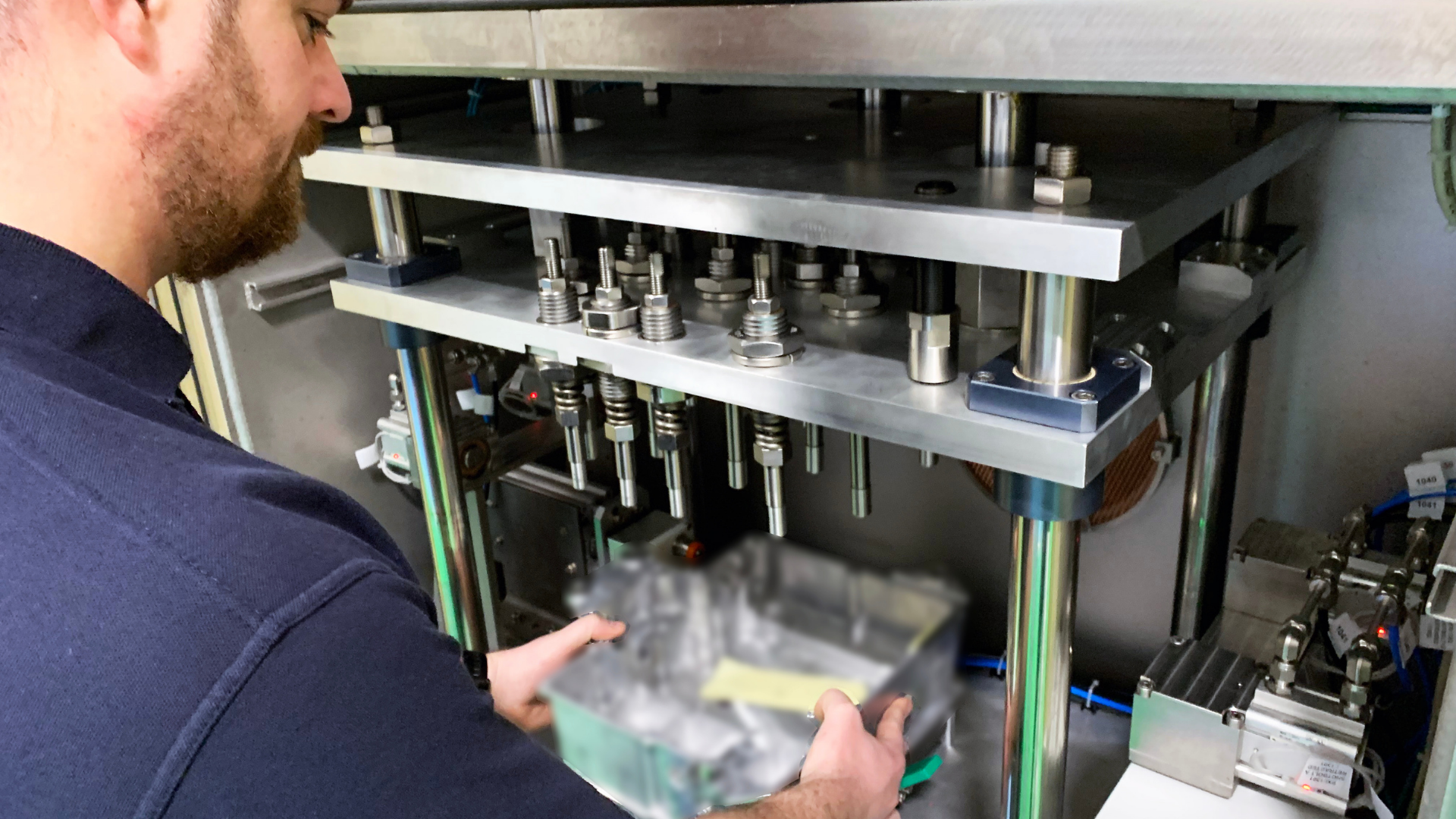
Tooling matters just as much. The fixture has to seal the part’s connections reliably, cycle after cycle, without damaging thin-walled tubes. Tooling is bespoke to the part, which is why it’s worth designing around your actual heat exchanger family from the start.
Helium use rises with part volume too. With helium prices up 30 to 40 per cent in recent years, helium recovery is worth modelling for high-volume heat exchanger lines.
What good looks like
If you’re specifying leak testing for brazed heat exchangers:
- Is each heat exchanger proved on its own straight after brazing?
- Is the whole part proved in a chamber, rather than individual joints sniffed?
- Is there a gross leak screen before the fine leak test?
- On microchannel lines, is the test data fed back to brazing process control?
- Is the chamber sized around the part family and your cycle time?
- Is a measured leak rate recorded against every serial number?
Every machine we design and manufacture is built to a CPK of 1.67, so the test itself isn’t the source of variation in your data.
For the wider range of HVAC components, see leak detection for HVAC components and the HVAC leak testing hub.
Frequently asked questions
How are brazed heat exchangers leak tested?
The finished heat exchanger is charged with helium inside an evacuated chamber and any escaping helium is measured, which proves every joint at once. A sniffer is then used to locate a leak where the joint can be repaired.
Can a leaking microchannel heat exchanger be repaired?
Usually not in production. The core is brazed in one furnace pass with many thin-walled joints, so a leak normally means scrap. That’s why microchannel testing focuses on catching problems early and feeding results back into the brazing process.
Why test heat exchangers straight after brazing?
Because a leak found at that point costs the least. Once the heat exchanger is built into a unit or charged with refrigerant, the cost of finding and dealing with the same leak goes up sharply.
What causes leaks in brazed joints?
The common causes are porosity and voids in the filler, incomplete fill of the joint gap, trapped flux, overheating of thin walls, and cracking from thermal stress or handling.