Heat pump leak testing proves that every refrigerant circuit, and every component that carries refrigerant, will hold its charge for the life of the product. That has always mattered. What’s changing is the refrigerant, and with it the size of the charge, the consequence of a leak and, for some systems, the pressure the circuit runs at. Each of those changes what the leak test has to do.
This piece covers why the refrigerant is changing, what that does to production leak testing, and what to check before you specify a test system for a new heat pump line.
Why the refrigerant is changing
For heat pumps sold into the EU, Regulation (EU) 2024/573 restricts fluorinated refrigerants with a global warming potential of 150 or more in new self-contained heat pumps, and in smaller split air-to-water units, from 1 January 2027. Most manufacturers are moving to natural refrigerants: propane (R290) for the majority of domestic units, and CO2 (R744) where its characteristics suit the application.
Great Britain has its own F-gas regime, so if you sell into more than one market, check the position for each one rather than assuming they match.
A smaller charge means a tighter leak rate
Flammable refrigerants are subject to charge limits under IEC 60335-2-40, so R290 heat pumps are designed to run on small charges. That’s good for safety. It also changes the arithmetic of a leak.
A leak rate that would barely register on a large HFC system takes a much bigger share of a small propane charge every year. The smaller the charge, the less leakage the circuit can tolerate over its service life, and the tighter the leak rate the specification needs.
That’s worth working through before the specification is fixed, not after the first warranty returns. Our leak rate calculator is a quick way to convert between units and see what a given rate means over a year in service.
Prove it tight before the refrigerant goes in
With an HFC, a slow leak is a performance and environmental problem. With propane it’s also a safety question,
Heat pump leak testing proves that every refrigerant circuit, and every component that carries refrigerant, will hold its charge for the life of the product. That has always mattered. What’s changing is the refrigerant, and with it the size of the charge, the consequence of a leak and, for some systems, the pressure the circuit runs at. Each of those changes what the leak test has to do.
This piece covers why the refrigerant is changing, what that does to production leak testing, and what to check before you specify a test system for a new heat pump line.
Why the refrigerant is changing
For heat pumps sold into the EU, Regulation (EU) 2024/573 restricts fluorinated refrigerants with a global warming potential of 150 or more in new self-contained heat pumps, and in smaller split air-to-water units, from 1 January 2027. Most manufacturers are moving to natural refrigerants: propane (R290) for the majority of domestic units, and CO2 (R744) where its characteristics suit the application.
Great Britain has its own F-gas regime, so if you sell into more than one market, check the position for each one rather than assuming they match.
A smaller charge means a tighter leak rate
Flammable refrigerants are subject to charge limits under IEC 60335-2-40, so R290 heat pumps are designed to run on small charges. That’s good for safety. It also changes the arithmetic of a leak.
A leak rate that would barely register on a large HFC system takes a much bigger share of a small propane charge every year. The smaller the charge, the less leakage the circuit can tolerate over its service life, and the tighter the leak rate the specification needs.
That’s worth working through before the specification is fixed, not after the first warranty returns. Our leak rate calculator is a quick way to convert between units and see what a given rate means over a year in service.
Prove it’s tight before the refrigerant goes in
With an HFC, a slow leak is a performance and environmental problem. With propane it’s also a safety question, which is why the standards limit the charge in the first place.
In production, the circuit and its components are proved tight with helium as a tracer gas before any refrigerant goes in. Charging a circuit that hasn’t been proved means finding the leak with propane in it.
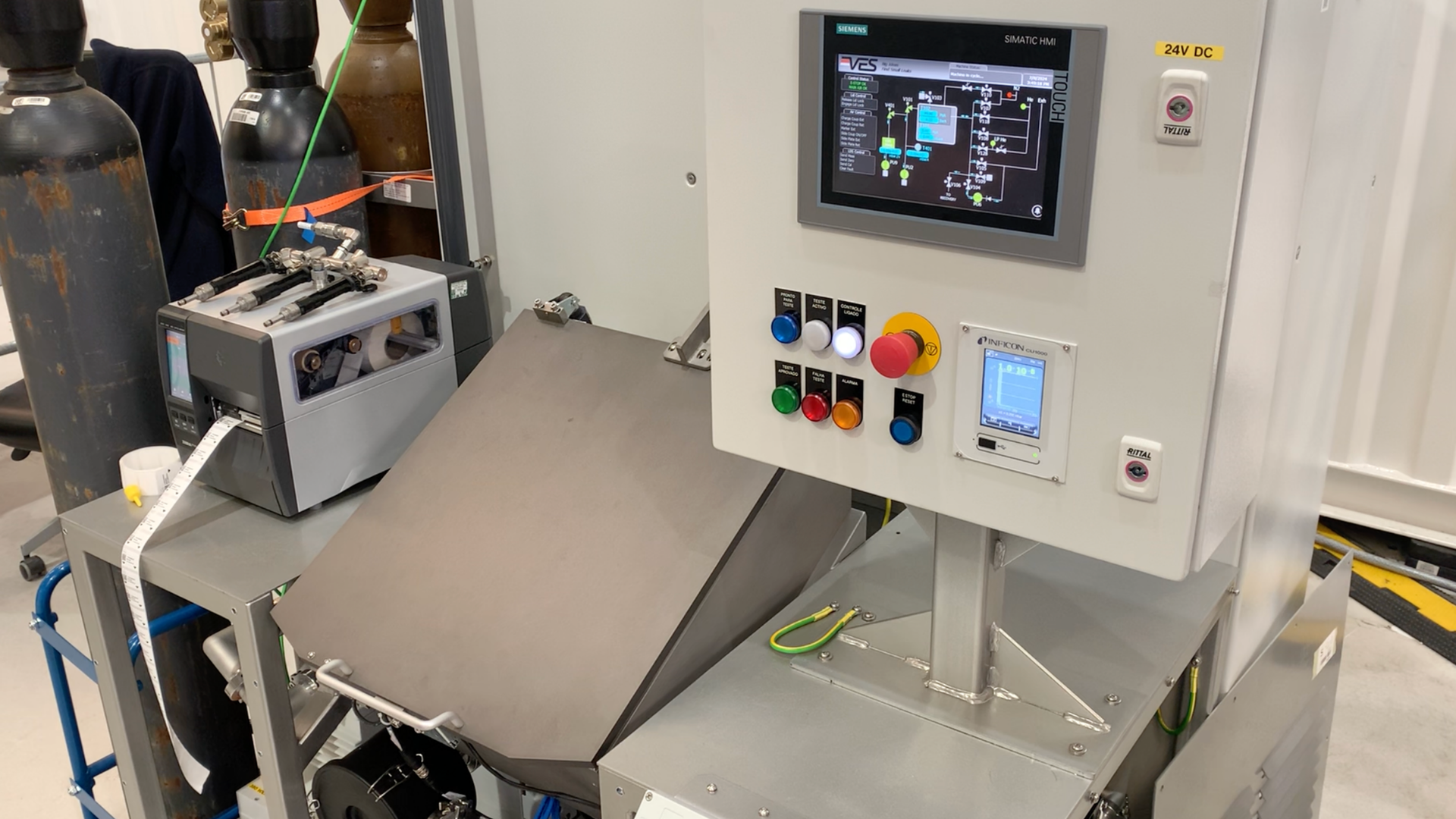
The method matters here. A pressure decay test resolves to around 1.0 x 10⁻² mbar·L/s, which is useful for screening out gross leaks and not much more. Helium vacuum testing takes HVAC components down to 2.0 x 10⁻⁶ mbar·L/s on the systems we build, and gives a clear pass-fail result with a measured leak rate value alongside it.
R744 and pressure
CO2 systems run at far higher pressures than HFC or propane systems, so the components have to be tested at a pressure that represents the duty.
This is where I’d want the test station’s safety case looked at as carefully as its sensitivity. A component under test at high pressure stores a lot of energy, and the station has to be designed so that a failure is contained rather than released. A test that’s sensitive enough but unsafe to run isn’t a test anyone should be operating.
Find the leak at component level
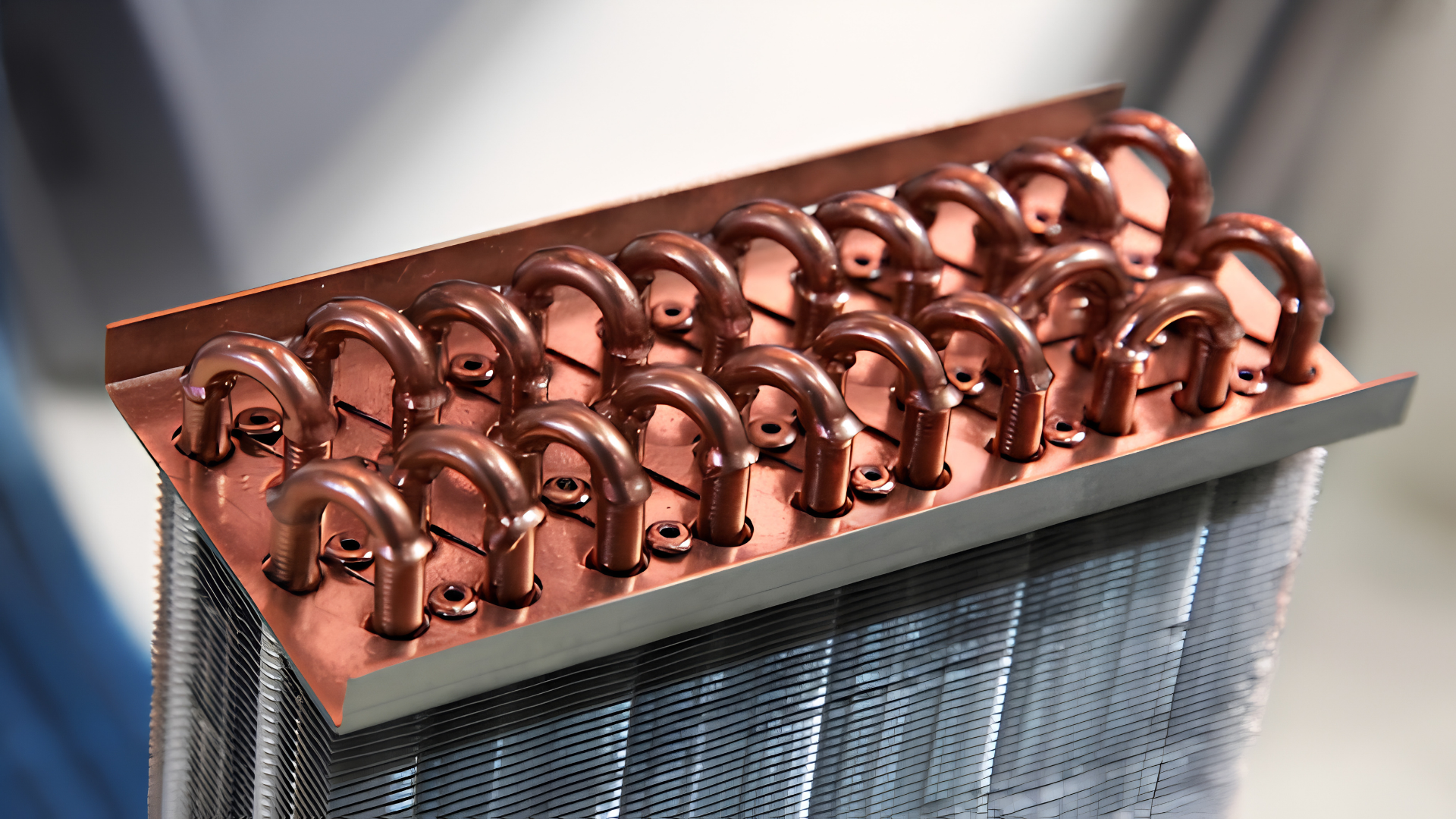
A heat pump is an assembly of brazed heat exchangers, a compressor, valves, hoses and the joints between them. The most expensive place to find a leak is in a charged unit at the end of the line. The cheapest is the component, before it’s brazed into anything else.
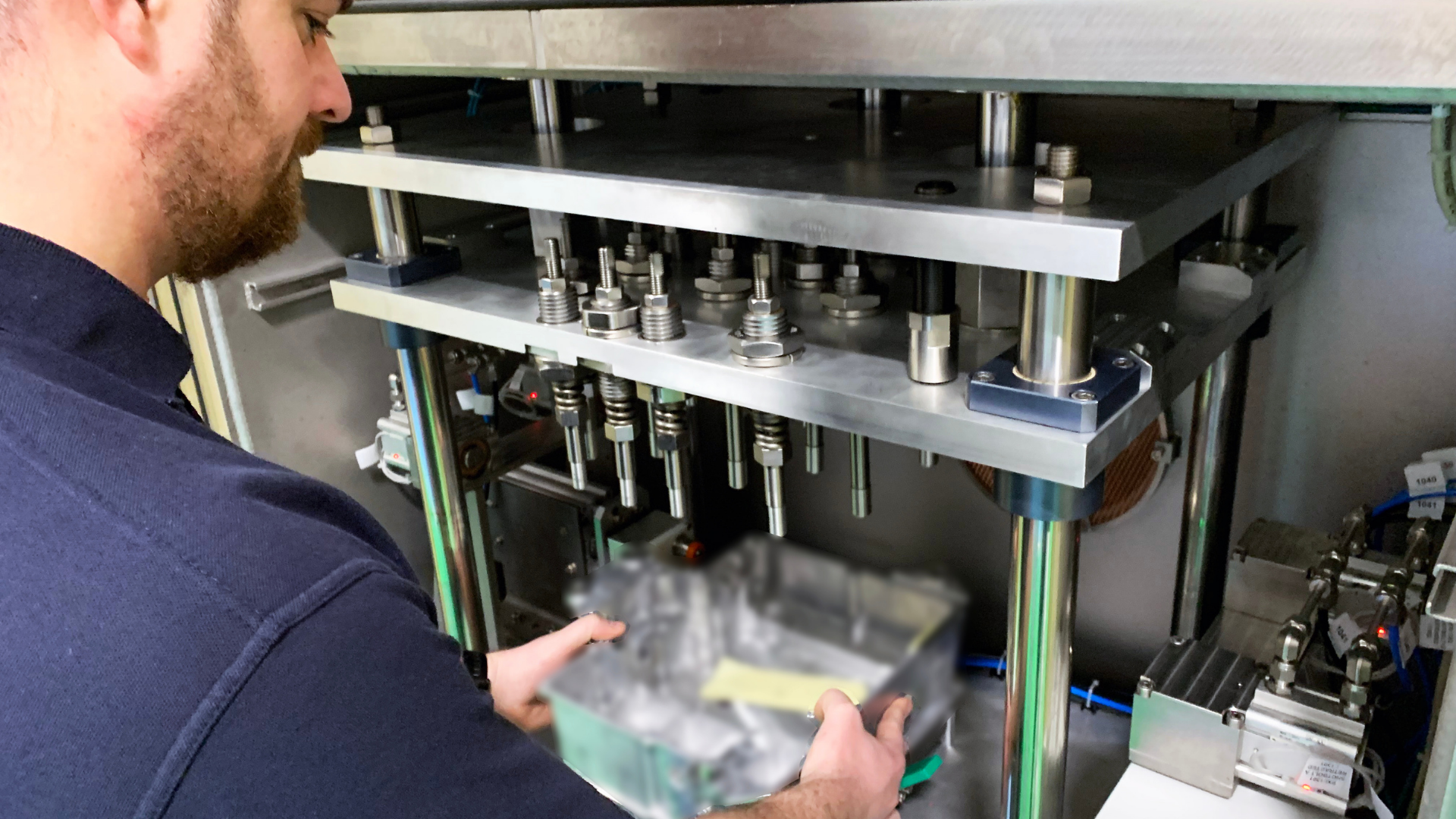
That usually means more than one test point: components proved before assembly, and the assembled circuit proved before charging. Where a leak can be repaired, a sniffer is the right tool for finding it. It’s the wrong tool for proving the part, because it only checks the places someone points it at. Proof comes from testing the whole component or circuit in a vacuum chamber.
What to check before you specify
If you’re setting up leak testing for a new heat pump line, these are the questions worth answering first:
- What’s the refrigerant and charge, and what leak rate does that charge actually require over the product’s life?
- Which components will you test individually, and which as an assembled circuit?
- What test pressure represents the duty, and does the specification call for more than one?
- Do you need to locate leaks for repair as well as prove parts?
- Does the cycle fit inside your TAKT time, including load and unload?
- Will a measured leak rate be recorded against every serial number?
- How much helium will you use, and does recovery make sense at your production rate, pressure and volume?
Every machine we design and manufacture is built to a CPK of 1.67, so the test itself isn’t the source of variation in your data. And with helium prices up 30 to 40 per cent in recent years, it’s worth knowing whether helium recovery changes your cost per part before the capital decision rather than after it.
For a fuller look at the subject, Andrea’s heat pump leak testing eBook is free to download, and the HVAC leak testing hub covers the wider component range.
Frequently asked questions
How are heat pumps leak tested in production?
The circuit and its components are proved tight with helium as a tracer gas before any refrigerant is charged. Components are usually helium leak tested before assembly and the assembled circuit again helium leak tested, before charging with refrigerant. Helium leak testing proves the part; a sniffer is used to locate leaks where a repair is possible.
How does R290 change heat pump leak testing?
Propane systems run on small charges because of the charge limits for flammable refrigerants. A small charge tolerates less leakage over the product’s life, so the leak rate in the specification usually needs to be tighter, and the test method has to be able to resolve it.
Why test before the refrigerant charge?
Because finding a leak is far simpler and safer with helium than with a charged flammable refrigerant. Proving the circuit tight first means a leak is found before the refrigerant is in it.
What leak rate should a heat pump circuit be tested to?
That depends on the refrigerant, the charge, the service life and the consequence of a failure. The more useful question is whether your test method can resolve the rate you set. Pressure decay resolves to around 1.0 x 10⁻² mbar·L/s; helium vacuum testing takes HVAC components down to 2.0 x 10⁻⁶ on the systems we build.