If you are overseeing an industrial plant floor today, you are likely wrestling with a frustrating operational mismatch: production demand is rarely a flat line, but your capital equipment usually is. On any given week, one assembly cell might be running at maximum capacity to meet a sudden product launch, while a neighbouring line experiences a temporary lull as part parameters shift or scheduled maintenance takes over.
In high-precision sectors like automotive component manufacturing, residential heat pump assembly, and semiconductor fabrication, this variability introduces severe operational headaches. When your production throughput fluctuates, your consumption of critical processing materials fluctuates right along with it.
Following the severe global helium supply disruptions at Qatar’s Ras Laffan complex, which abruptly erased roughly 33% of the world’s tracer gas output, spot prices have surged by 70% to 100%. When production volume spikes on a high-throughput test line, your daily expenditure on raw helium can rapidly spiral out of control, eating directly into unit margins.
Historically, factories solved this by investing in rigid, fixed recovery infrastructure for every individual line, or by simply absorbing the volatile “Helium Tax” and buying more cylinders reactively. But in an era of strict budget scrutiny and commodity shortages, neither over-specifying hardware nor over-purchasing gas is an option.
The solution requires an asset class that matches the dynamic reality of your shop floor: operational flexibility through mobile gas repurification.
Why Fixed Recovery Limits Capital Efficiency
Traditional helium reclaim systems are engineered as stationary installations. They are deeply integrated into a single leak testing bench via custom logic handshakes, complex PLC programming, and permanent pipeline routing.
While this model works well for unchanging, predictable manufacturing lines, it introduces severe capital inefficiencies the moment throughput fluctuates:
- Underutilised Capital: If Production Line A is throttled down for an engineering changeover, its dedicated, expensive recovery unit sits completely idle.
- Exposed Volatility: Meanwhile, if Production Line B suddenly ramps up to double shifts, it quickly exhausts its localised gas supply, forcing you back onto the volatile spot market to cover the shortfall.
- Floor Space Constraints: Legacy plants designed before gas recovery became a necessity simply do not have the physical floor space to drop a massive, permanent recovery unit beside every single test cell.
Procurement specialists and process engineers are under intense pressure to lower total cost of ownership (TCO) and maximise equipment utilisation. You cannot justify dedicating premium capital assets to a single cell when production priorities are constantly shifting across the facility.
The Mobile Alternative
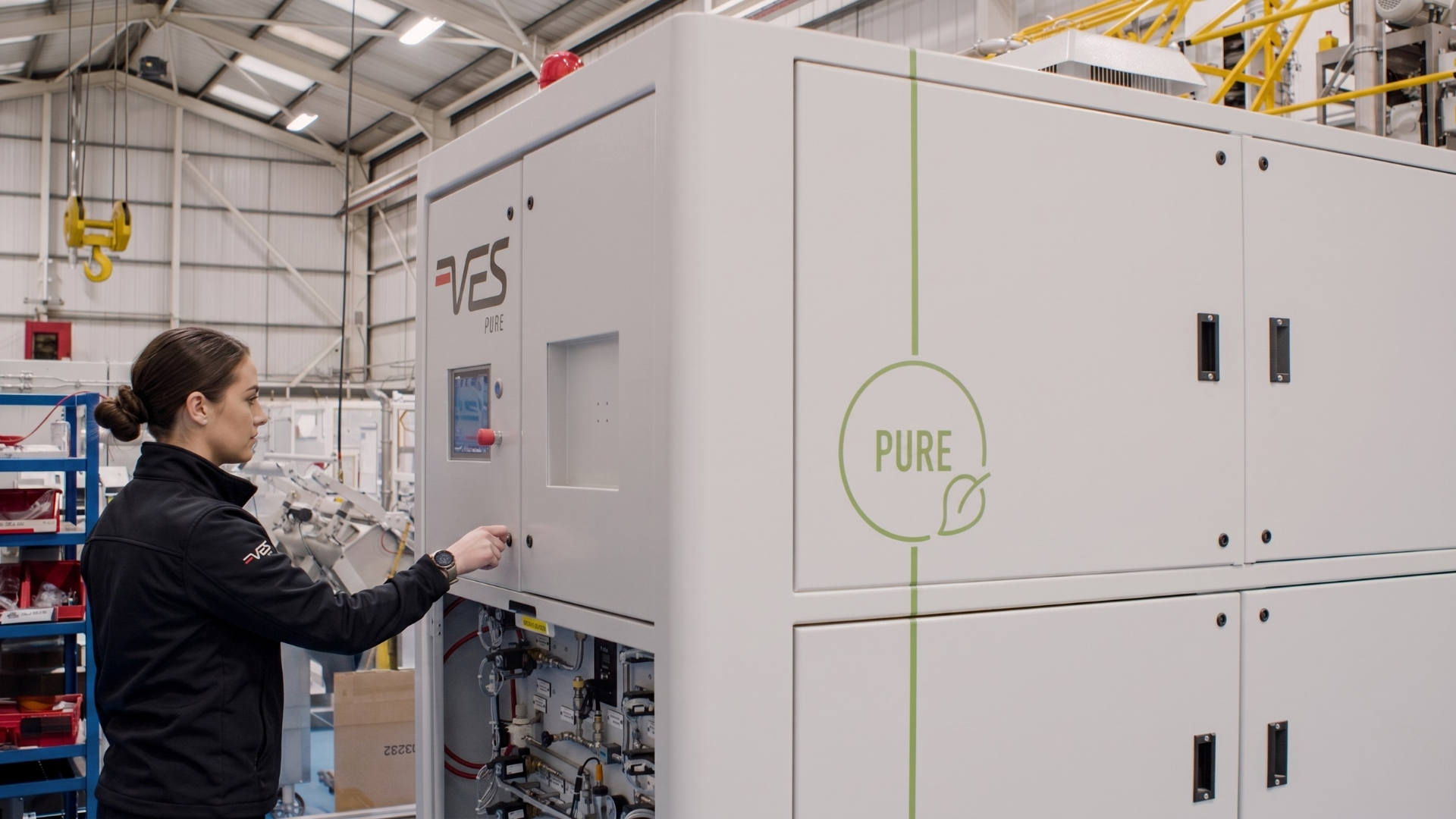
At Vacuum Engineering Services (VES), we approached this problem by designing a system focused on ultimate capital efficiency: the VES PURE Helium Recovery System.
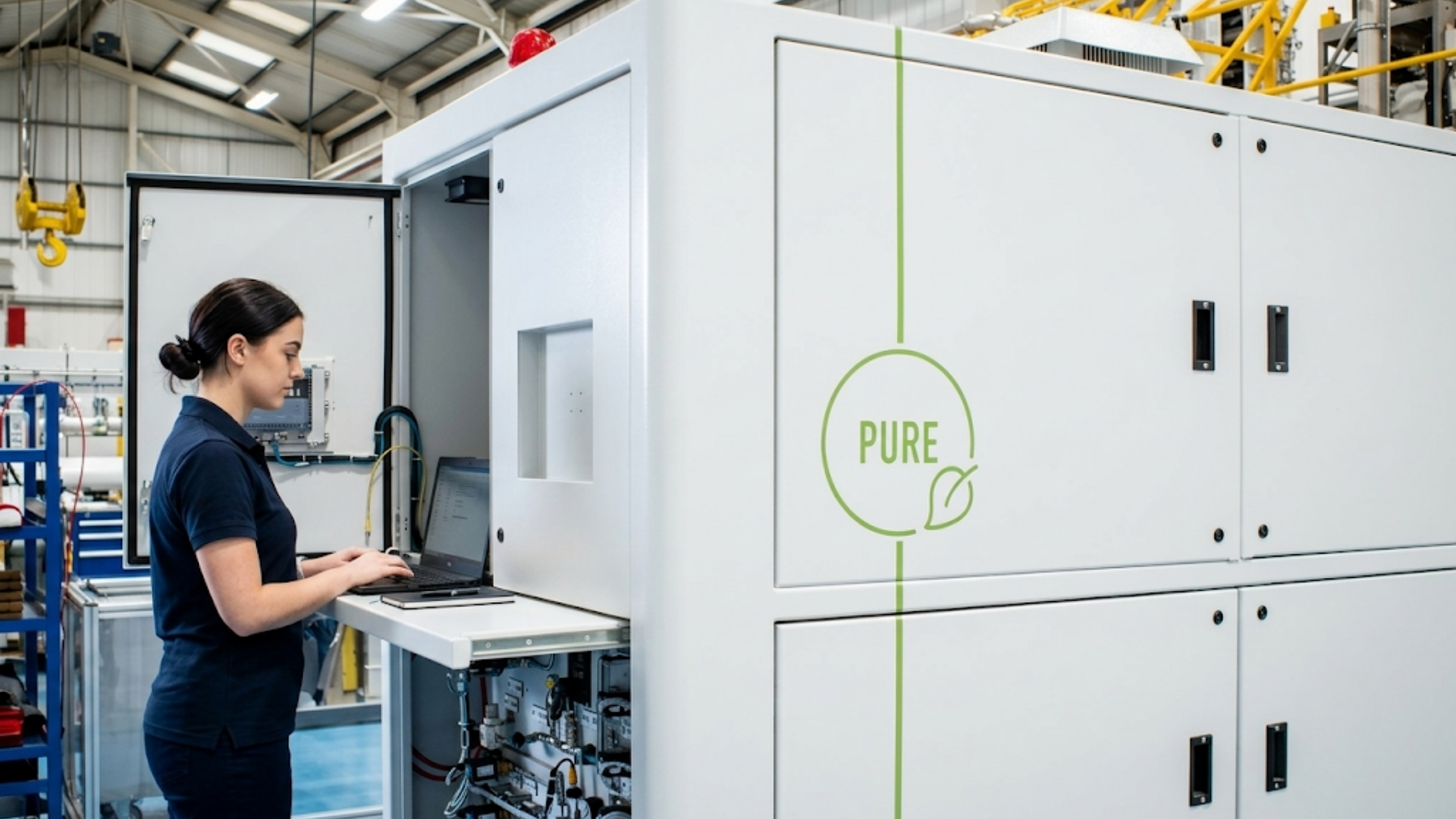
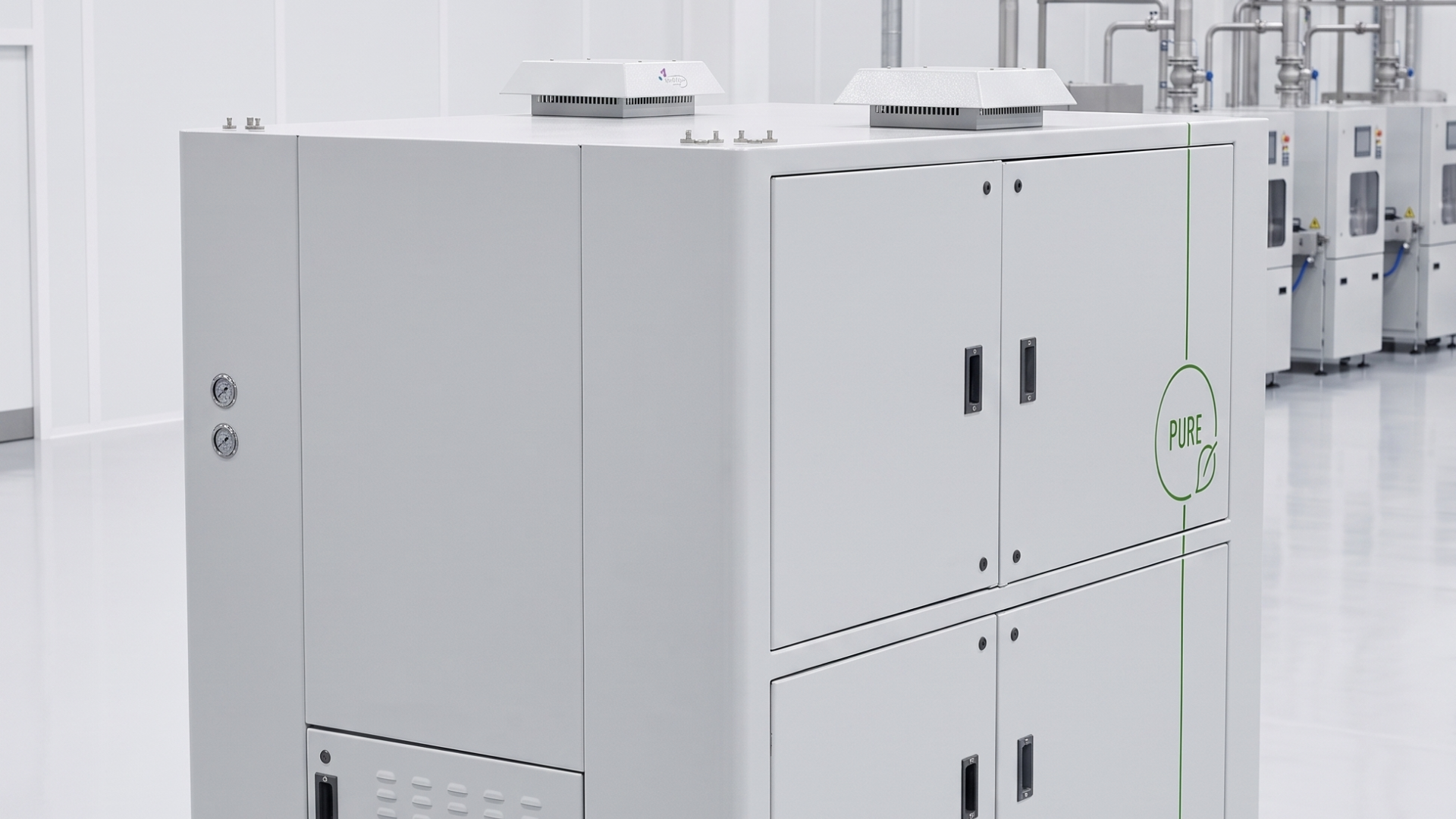
Instead of anchoring your recovery capability to a single square meter of concrete, PURE features a compact, low-profile, and highly transferable design. It is engineered to operate as a self-contained “black box” that can be rapidly disconnected from one test rig and moved directly onto another as your production volumes shift.
This mobility fundamentally transforms how a facility manages its tracer gas. A single PURE unit can act as a shared utility across multiple manufacturing cells. When Line A finishes its high-volume batch, the purification asset can be rolled over to support Line B’s upcoming peak cycle.
By sharing one high-efficiency asset across multiple lines, you drastically lower your initial capital expenditure while protecting multiple product lines from market volatility.
Complete Independence
The biggest barrier to asset transferability on a factory floor is the setup time. Process engineers are rightfully protective of their validated processes; they cannot afford a multi-day installation shutdown or complex code revalidation just to move a piece of hardware.
PURE removes this friction through complete plug-and-play autonomy. The system requires absolutely no electronic communication or PLC handshakes with your existing leak testing machinery. It is entirely brand-agnostic, meaning it can purify gas for a VES system in the morning and seamlessly transition to a competitor’s low-pressure leak test bench in the afternoon.
It retrofits to your lines without altering pre-evacuation levels, cycle parameters, or validated cycle times. You achieve an immediate 86% reduction in daily gas demand on whatever line it is connected to, delivering an optimised financial return of under 12 to 18 months at current spot prices.
Uncompromising Purity and Traceability on the Move
When you move a mobile asset between lines, it has to handle unpredictable factory conditions. PURE is engineered with rough-use tolerance, meaning it continues to purify effectively even when handling varying collection pipeline pressures or air leaks introduced during a quick transfer.
Unlike low-cost alternatives that merely capture and return diluted gas, PURE actively separates air and nitrogen contaminants. It mechanically repurifies the helium back to a guaranteed steady-state concentration of over 99%, ensuring your fine leak testing process maintains a flawless Cpk > 1.67$ no matter where the machine is parked.
To satisfy strict quality audits under IATF 16949, AS9100, or ISO 13485, PURE features an integrated helium concentration meter. This sensor creates a real-time, digital quality record of exact gas purity throughout the recovery cycle. Even as the asset moves across different production cells, your traceability remains continuous, automated, and completely transparent.
Aligning Strategy with Shop-Floor Reality
Fluctuating throughput doesn’t have to mean fluctuating margins. By treating gas recovery as a flexible, mobile utility rather than a rigid stationary fixture, you can maximise asset utilisation, drastically lower gas waste, and fulfil corporate ESG mandates without compromising your line’s agility.