If you are managing a high-pressure leak-testing line, whether you are signing off on residential heat pumps, automotive air-conditioning lines, or fuel cells, you already know the tension that defines your daily shift. On one hand, you have massive throughput targets to hit, and the board is constantly pushing for cost reduction and strict sustainability metrics. On the other hand, you are testing components at demanding pressures where a single quality slipup can lead to catastrophic failure, expensive product recalls, or severe liability exposure.
In this environment, catching fine leaks isn’t just a standard quality checkpoint; it is a safety-critical barrier. However, the global helium market has forced many manufacturers into a dangerous corner. Following the major infrastructure disruptions at the Ras Laffan complex, which removed roughly a third of the world’s helium supply overnight, spot prices have surged. Suddenly, the “Helium Tax” is eating away at already thin product margins.
To survive, factories that do not already have a system in place are rushing to adopt helium recovery. But a dangerous trend has emerged in the rush to save money: the reliance on generic “capture-and-pump” recovery systems.
There is a massive difference between simply moving gas around and actually purifying it. Relying on basic recirculation introduces a hidden quality risk that could be causing false passes on your line right now.
The Hidden Trap of Basic Gas Recirculation
Standard, low-cost recovery units operate on a very basic premise: they capture the post-test gas from your chamber and pump it straight back into the machine for the next cycle. On paper, it looks like you are saving gas. In reality, you are steadily degrading your testing environment.
Every single time a part is loaded, tested, and unloaded, tiny amounts of air and nitrogen sneak into the collection pipeline. In a real factory environment, pipeline micro-leaks are a fact of life. When you use a generic system, those contaminants are pumped right back into your storage tanks.
With every cycle, your pure helium concentration drifts downward. If your background gas drops from 100% down to 80%, or even 70%, your mass spectrometer leak detector is no longer receiving the concentration it needs to flag a critical defect. The machine reads a lower gas signal, assumes the part is tight, and flashes a green light.
That is a false pass. You have just cleared a defective, safety-critical high-pressure component to ship to a customer, all because your recycled gas was diluted.
How PURE Eliminates the Quality Trade-Off
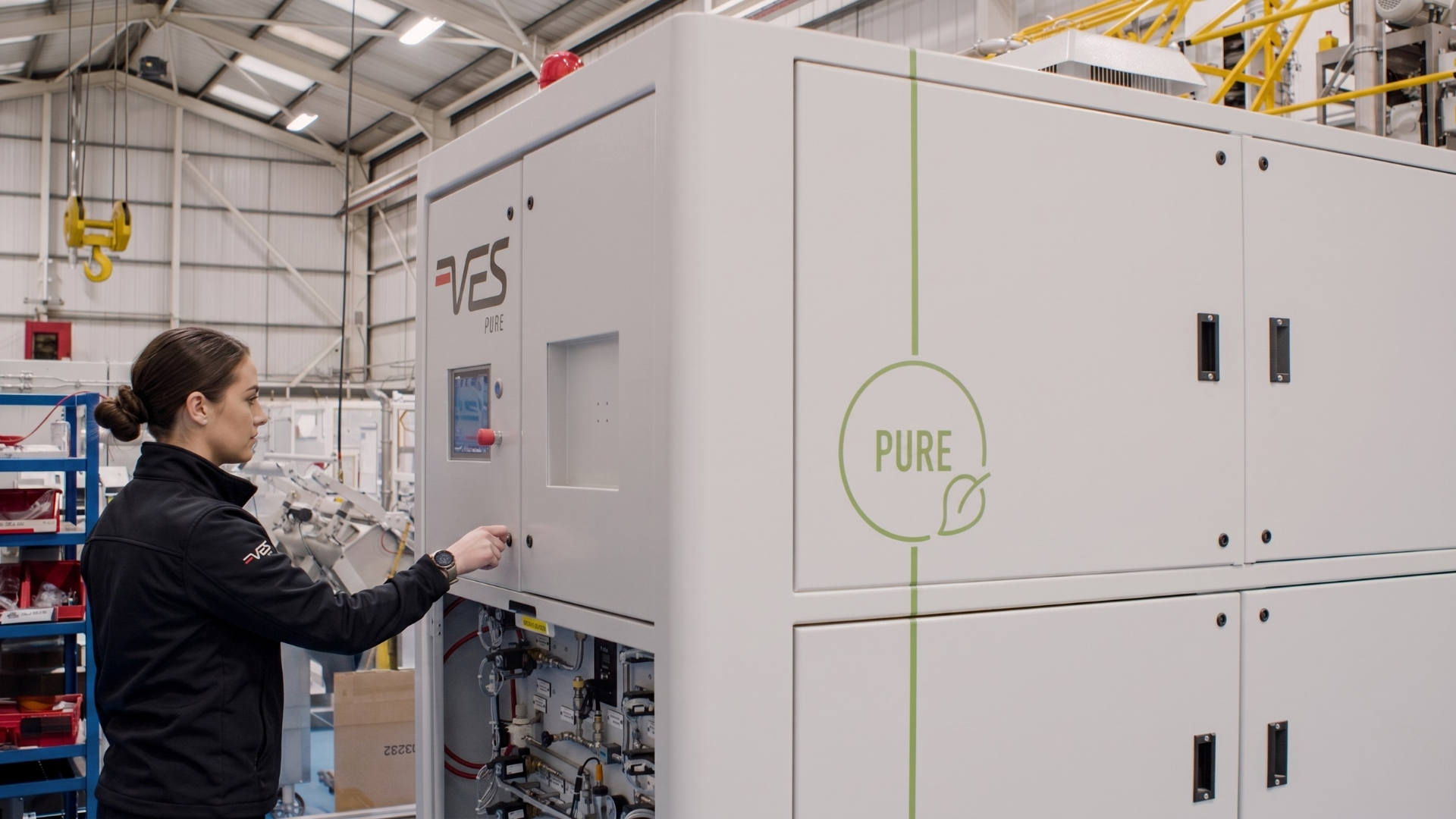
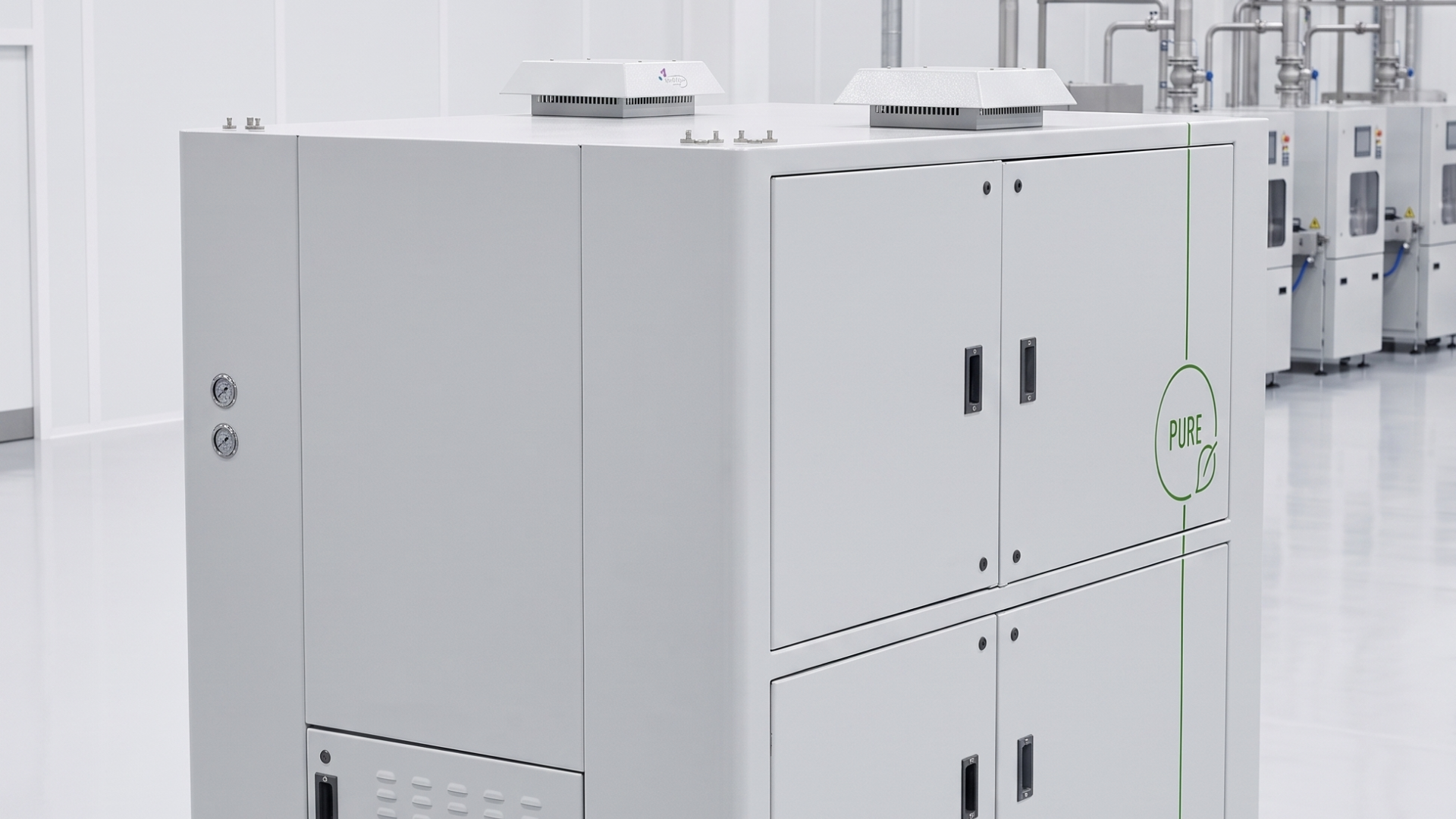
At Vacuum Engineering Services (VES), we looked at this conflict and decided that manufacturers shouldn’t have to trade test integrity to achieve cost optimisation. We engineered a solution that eliminates the risk of concentration drift: the VES PURE Helium Recovery System.
The core difference lies in active repurification technology. PURE doesn’t just store and return whatever mixture it receives. It uses advanced mechanical separation to actively strip out the air and nitrogen particles from the captured gas, re-concentrating the helium back to a guaranteed steady-state purity of over 99% before it ever touches your testing machine.
Because PURE returns specification-grade gas for every single cycle, you completely eliminate the risk of false passes caused by gas degradation. Your process control stays rock-solid, maintaining a consistent Cpk greater than 1.67.
Traceability for Demanding Audits
Additionally, how do you prove that your gas concentration hasn’t degraded when a quality inspection requests it? With traditional recovery loops, you are left with manual sampling or guesswork.
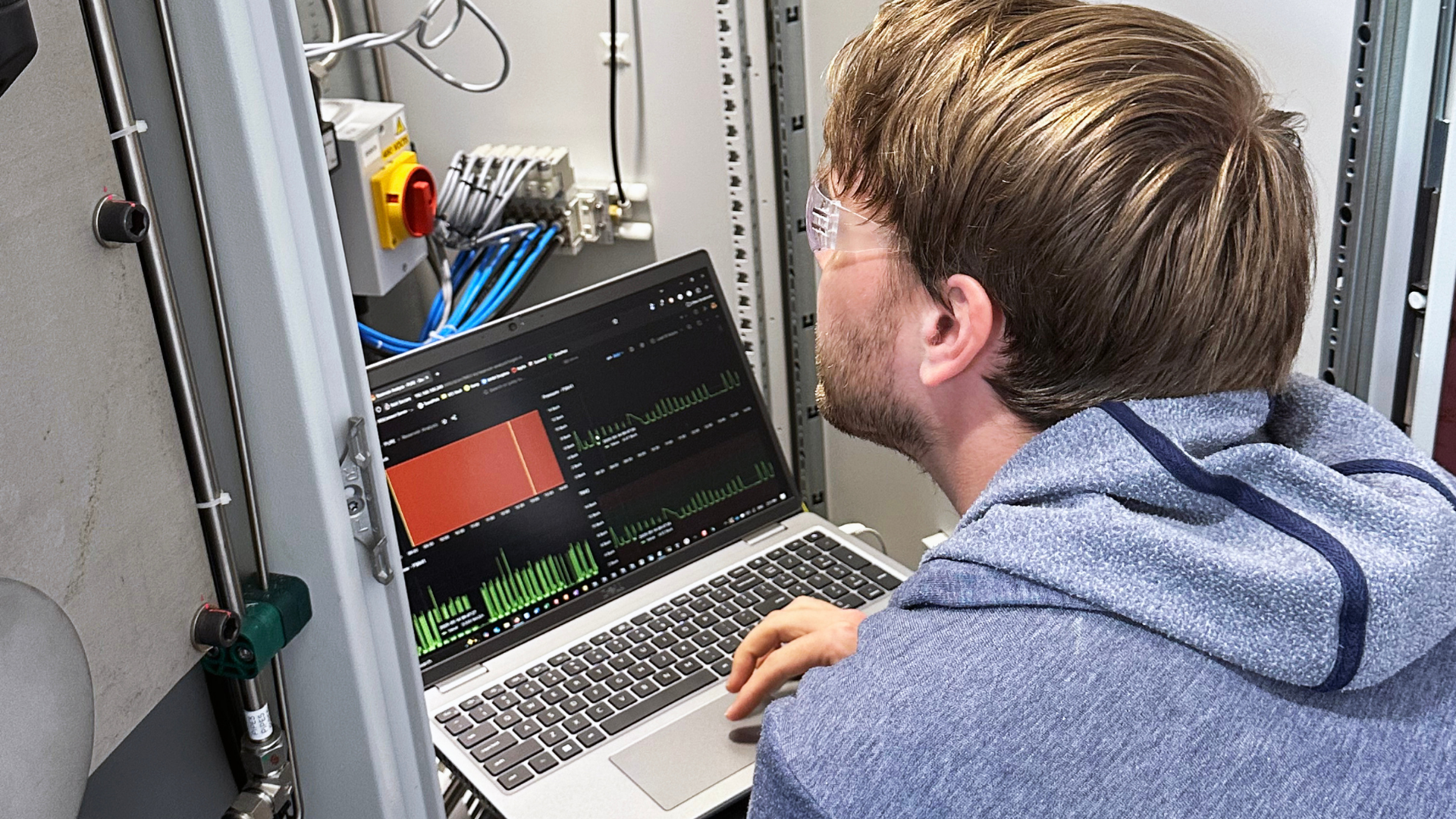
A recovery system from VES can solve this compliance gap by integrating a dynamic, real-time helium concentration meter directly into the system. The sensor reads and logs the exact gas purity levels at multiple points during every single recovery cycle, creating an automated, time-stamped digital audit trail. When you are facing strict quality audits under IATF 16949, AS9100, or ISO 13485, you no longer have to rely on human error or manual logs. You have verifiable, documented proof of test gas integrity for every single component that leaves your facility.
Protecting Margins Without Modifying Processes
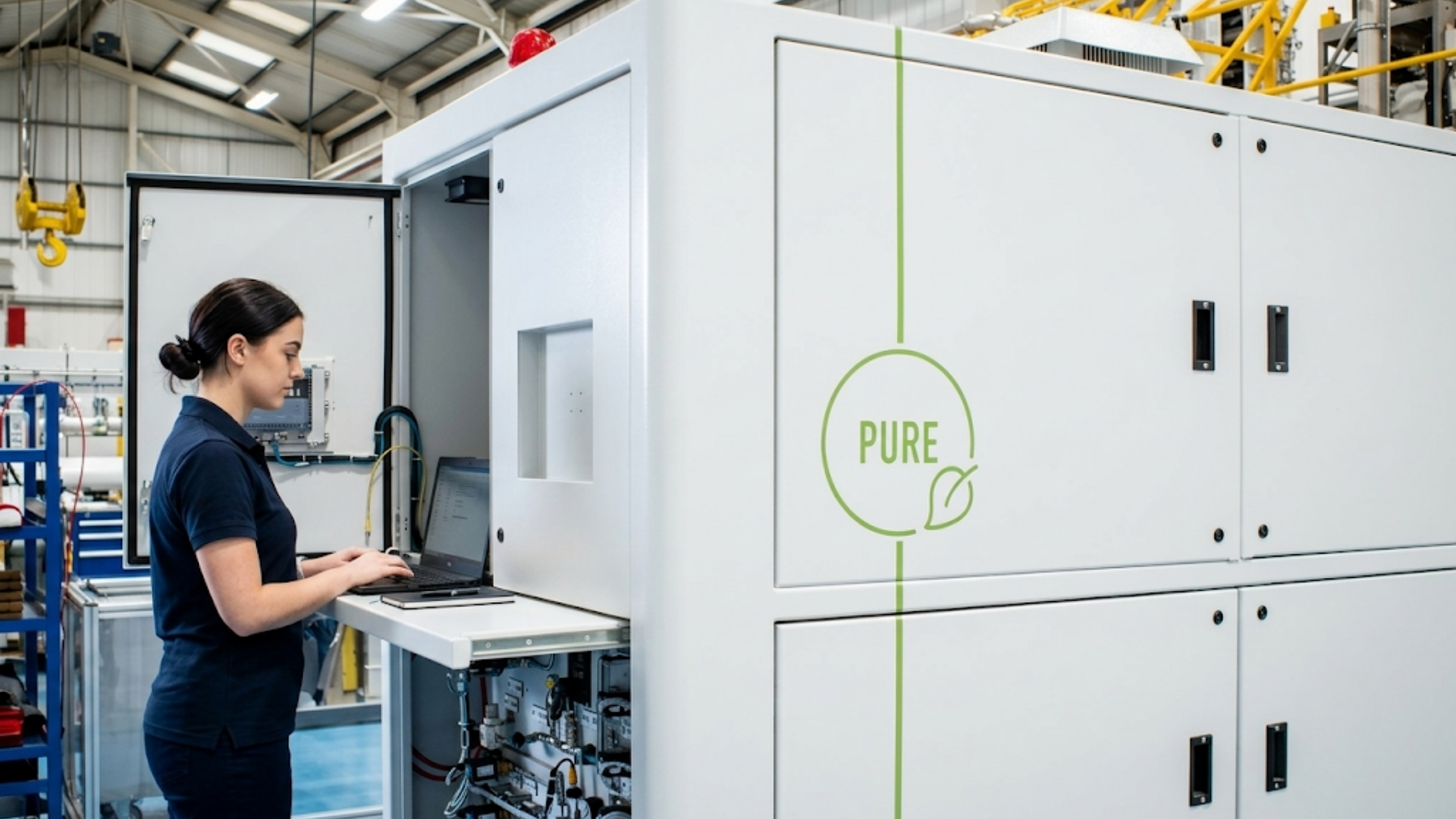
The best part for process engineers is that a VES PURE system delivers this security through plug-and-play autonomy. It runs as an independent system with no invasive PLC handshakes or complex machine-specific programming. It retrofits to your existing low-pressure lines without altering your pre-evacuation levels, cycle parameters, or validated cycle times.
You get an 86% reduction in daily gas consumption, insulated protection against volatile spot prices, and absolute certainty that your fine leak testing is accurate.
In a supply-constrained market, saving helium is common sense. But saving it through active repurification is the only way to protect your customers, your reputation, and your bottom line. Get in touch, and let’s discuss how you can stop risking your quality data on basic recirculation.