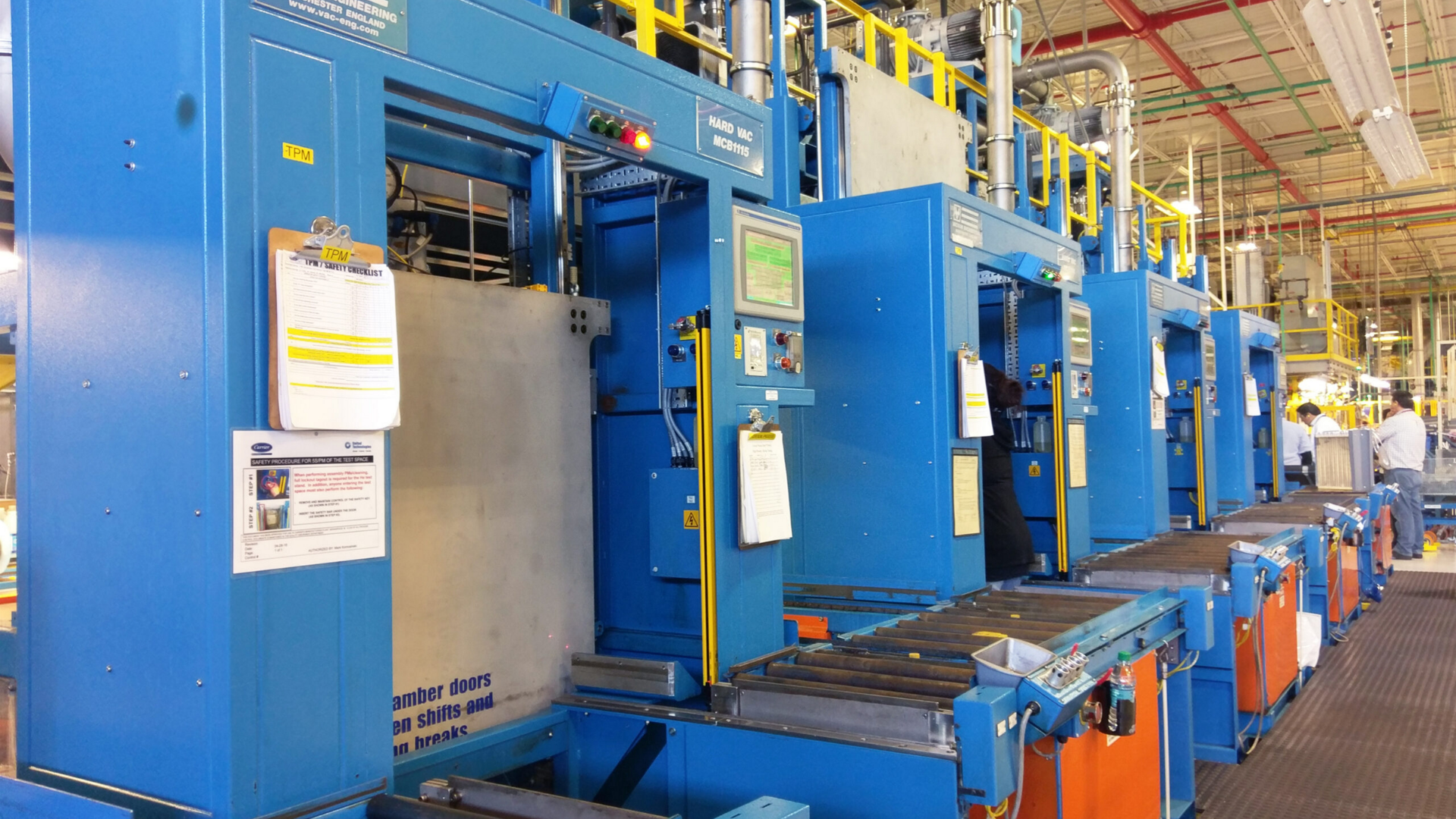
Vacuum chamber leak testing is a highly sensitive method for checking components and assemblies for leaks in production. The part is placed inside a sealed chamber and tested using vacuum conditions and tracer gas, commonly helium.
For manufacturers, vacuum chamber testing is often used when repeatability, sensitivity and a reliable pass/fail result are important. It can be a strong choice for parts that can be chambered and where the required leak rate is too low for simpler methods.
VES designs helium leak testing systems around the part, required leak rate, production volume and cycle time. For the main helium systems page, see helium leak testing systems.
What Is Vacuum Chamber Leak Testing?
Vacuum chamber leak testing uses a sealed chamber to create controlled test conditions around the part. Depending on the application, the part may be pressurised with helium while the chamber is evacuated, or the test may be configured in another way to detect helium movement through a leak path.
The key benefit is control. By placing the part in a chamber, the system can detect very small leaks with less dependence on manual probe movement or visual inspection.
How a Vacuum Chamber Leak Test Works
A typical vacuum chamber leak test includes:
- Loading the part into a chamber or fixture.
- Sealing the part and chamber.
- Evacuating the chamber or creating the required pressure conditions.
- Introducing helium tracer gas as required by the process.
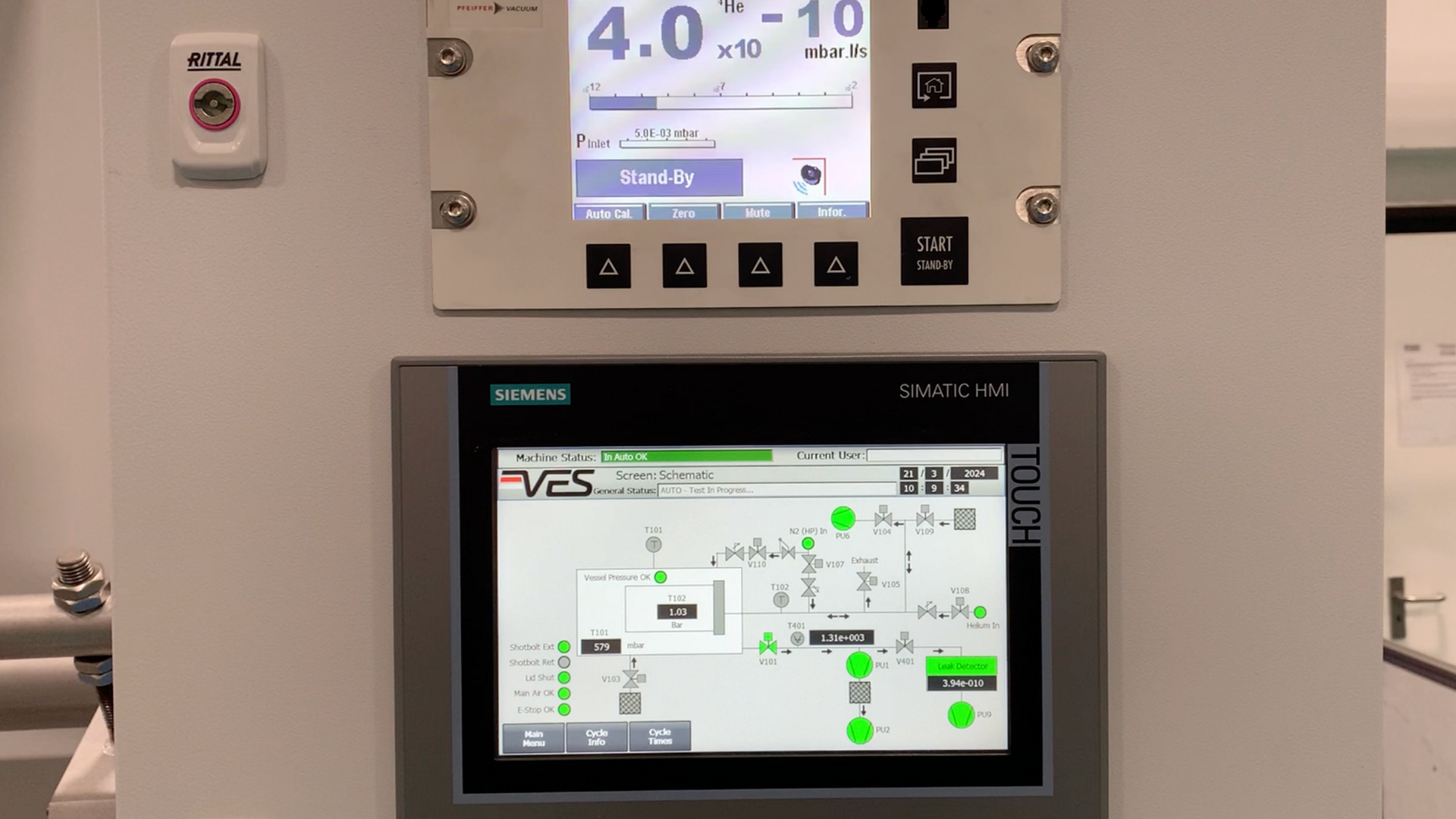
- Measuring helium to determine whether the part meets the leak rate.
- Recording a pass/fail result and moving the part to the next production stage.
The exact process depends on the product, required leak rate and production design. VES specify the system around the application rather than applying a one-size-fits-all machine.
When Vacuum Chamber Testing Is the Best Fit
Vacuum chamber testing is often a good fit where manufacturers need:
- High sensitivity.
- Repeatable production testing.
- Controlled pass/fail results.
- Reduced operator dependency.
- Automated or semi-automated testing.
- Traceable quality data.
- Confidence in very small leak rate limits.
It is commonly considered where product quality, safety, refrigerant containment or warranty performance depend on reliable leak detection.
Parts and Applications Suited to Vacuum Chamber Testing
Vacuum chamber leak testing can be used across many industrial sectors, including automotive, HVAC, clean energy, medical and general manufacturing.
Suitable parts may include:
- HVAC coils and heat exchangers.
- Fuel system components.
- Battery and thermal management components.
- Pressure assemblies.
- Sealed housings.
- Medical or technical components where very small leaks matter.
For HVAC applications, see VES HVAC leak testing systems: HVAC leak testing systems.
Vacuum Chamber Testing vs Sniffer and Accumulation Testing
Each leak testing method has a role.
Vacuum chamber testing is usually selected where sensitive and repeatable pass/fail testing is required. It can be well suited to automated production lines and quality-critical components.
Sniffer testing is useful when the leak location needs to be found. It can support rework and diagnosis, but it may be more operator-dependent.
Accumulation testing can be useful where chamber testing is not suitable or where a less complex atmospheric test can meet the required leak rate.
The correct method depends on the leak rate, part geometry, production volume, cycle time and whether the system needs to locate leaks or confirm that parts are leak-tight.
Key Specification Factors: Leak Rate, Chamber Size and Cycle Time
Vacuum chamber systems should be specified around real production requirements. Important factors include:
- Required leak rate.
- Part size and volume.
- Chamber size.
- Test pressure.
- Cycle time.
- Pumping requirement.
- Tooling and sealing.
- Automation and part handling.
- Data capture and traceability.
- Service and calibration access.
Chamber size is especially important. A larger chamber may allow more part flexibility, but it can also affect evacuation time and system footprint. VES’ experience in volume optimised leak detection helps reduce unnecessary chamber volume where suitable.
Automation, Tooling and Production Integration
In high-volume production, the chamber is only one part of the system. Loading, unloading, tooling, sealing, data capture and operator access all affect performance.
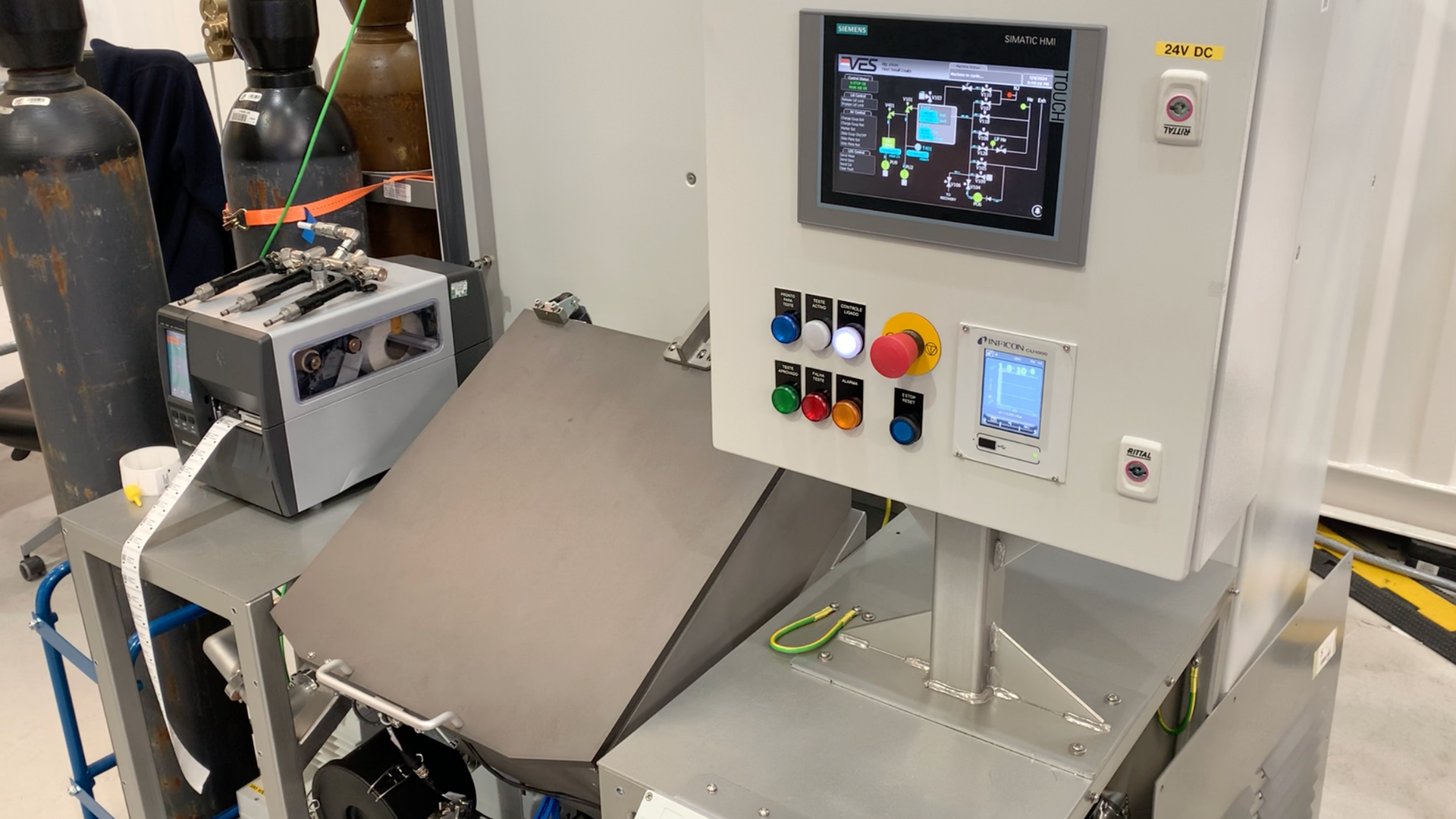
VES can design systems as standalone machines, semi-automated cells or fully integrated production line equipment. The aim is to support reliable leak detection without creating unnecessary restrictions on throughput.
Helium Use and Recovery Considerations
Vacuum chamber testing may use helium regularly, especially in production environments. Where helium usage is significant and the process is suitable, PURE helium recovery can help recover, repurify and reuse helium from the leak testing process.
See VES PURE helium recovery systems: PURE helium recovery systems.
Speak to VES About Vacuum Chamber Leak Testing
Talk to VES about whether a vacuum chamber leak testing system is suitable for your part size, leak rate target, cycle time and automation requirements.