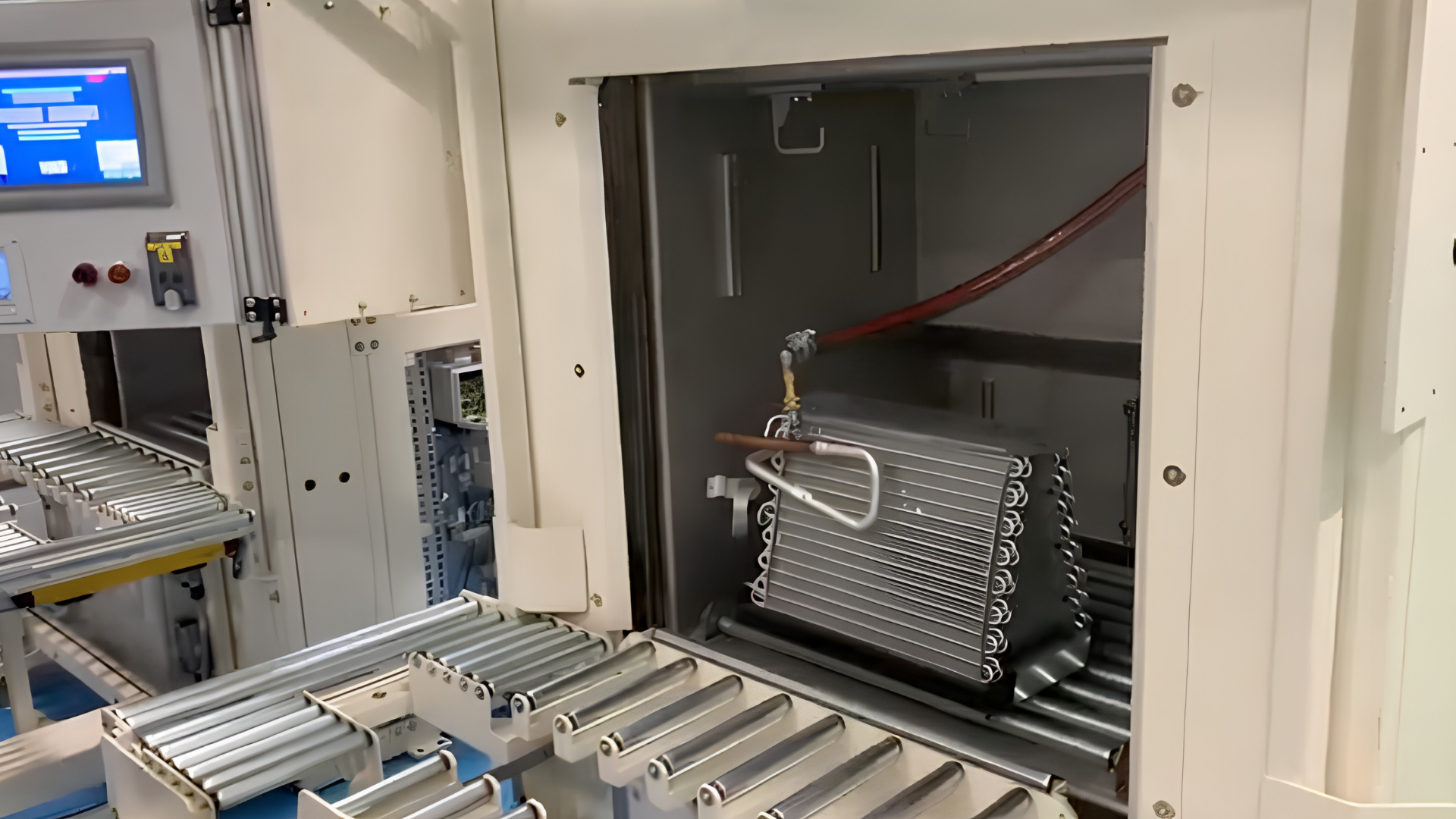
HVAC coil leak testing verifies that condensers, evaporators, heat exchangers and related coil assemblies meet the required leak rate before they leave production. For manufacturers, this is not only a quality control step. It protects refrigerant containment, product performance, warranty exposure and confidence in the production line.
VES designs and builds HVAC leak testing systems around the component, required leak rate, cycle time and production environment. The right test method depends on the part design, the level of sensitivity required and whether the production process needs to locate a leak or confirm that the product is leak-tight.
For broader sector information, see VES HVAC leak testing systems: HVAC leak testing systems.
What Is HVAC Coil Leak Testing?
HVAC coil leak testing is the process of checking coil-based components for very small leaks before installation or shipment. These components can include evaporators, condensers, radiators, heat exchangers, refrigeration coils and similar assemblies used in air conditioning, residential HVAC, automotive HVAC and thermal management systems.
The test usually needs to confirm that the coil can hold pressure and maintain refrigerant containment during real use. In high-volume manufacturing, the test also needs to be repeatable, fast enough for production, and robust enough to avoid false passes or false fails.
Why Coil Leak Testing Matters in HVAC Manufacturing
A small leak in an HVAC coil can create large problems after the product leaves the factory. Refrigerant loss can reduce system performance, increase energy use, create warranty claims and, depending on the refrigerant and market, create compliance concerns.
Production leak testing helps manufacturers:
- Confirm that each coil meets the required leak rate.
- Reduce the risk of refrigerant loss in service.
- Protect downstream assembly and warranty performance.
- Identify process issues before they become batch problems.
- Maintain confidence in product quality at scale.
For manufacturers working with high production volumes, the leak test also needs to support output. A system that is sensitive but too slow can restrict production. A system that is fast but not repeatable can create waste and rework. VES specify systems around both the technical leak rate and the practical production requirement.
Common HVAC Coil Leak Testing Methods
Several methods can be used for HVAC coil leak testing. The best option depends on the required sensitivity, product geometry, accessibility and cycle time.
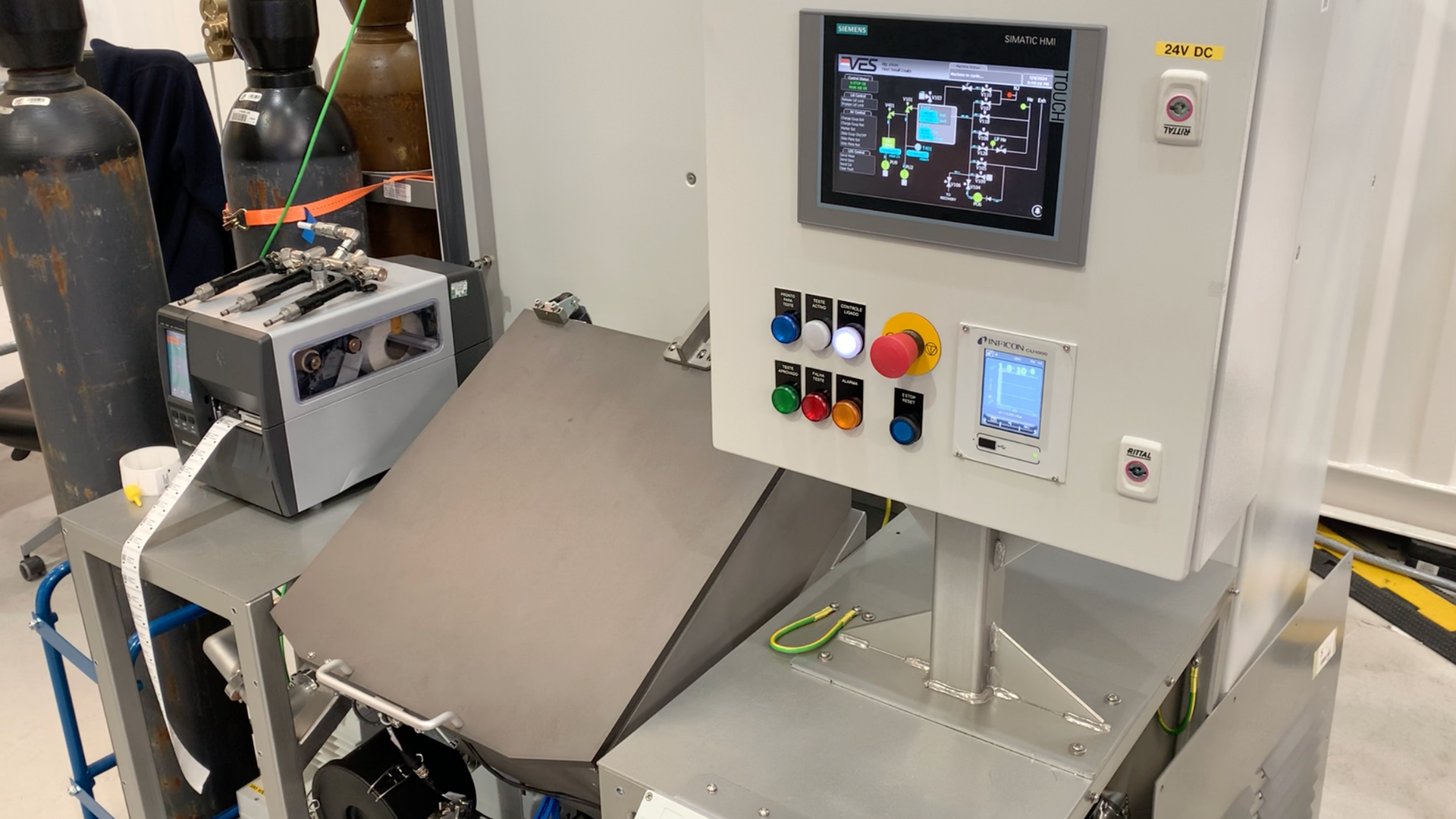
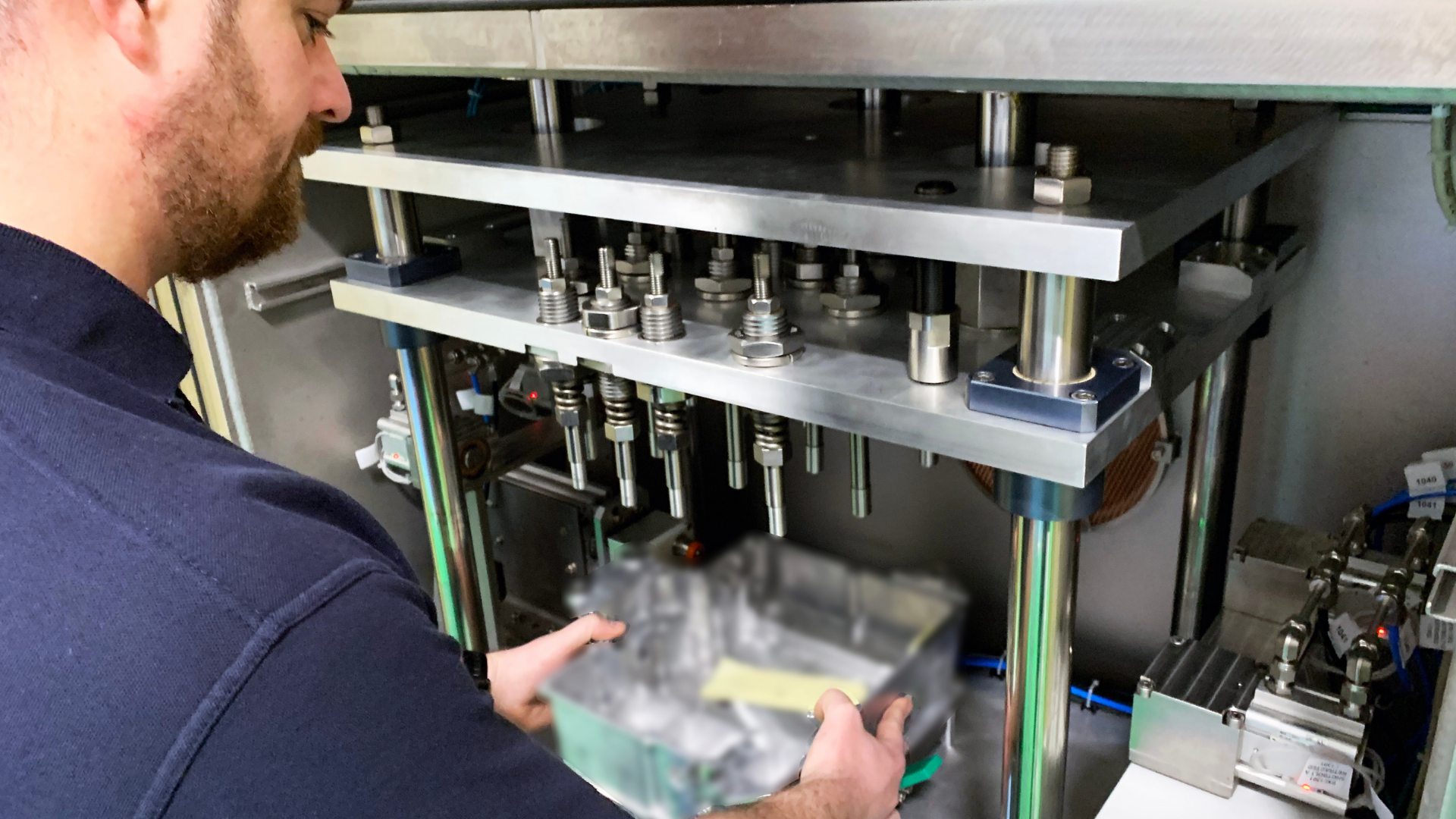
Hard vacuum helium leak testing is often used where high sensitivity and repeatability are required. The part is placed in a chamber, evacuated and tested using helium tracer gas. This can be a strong option where the coil can be chambered and the production process needs a reliable pass/fail result.
Accumulation testing can be used where a full vacuum chamber approach is not suitable or where the required sensitivity allows for atmospheric testing. The part is charged with tracer gas and any escaping gas is collected and measured in an enclosed space.
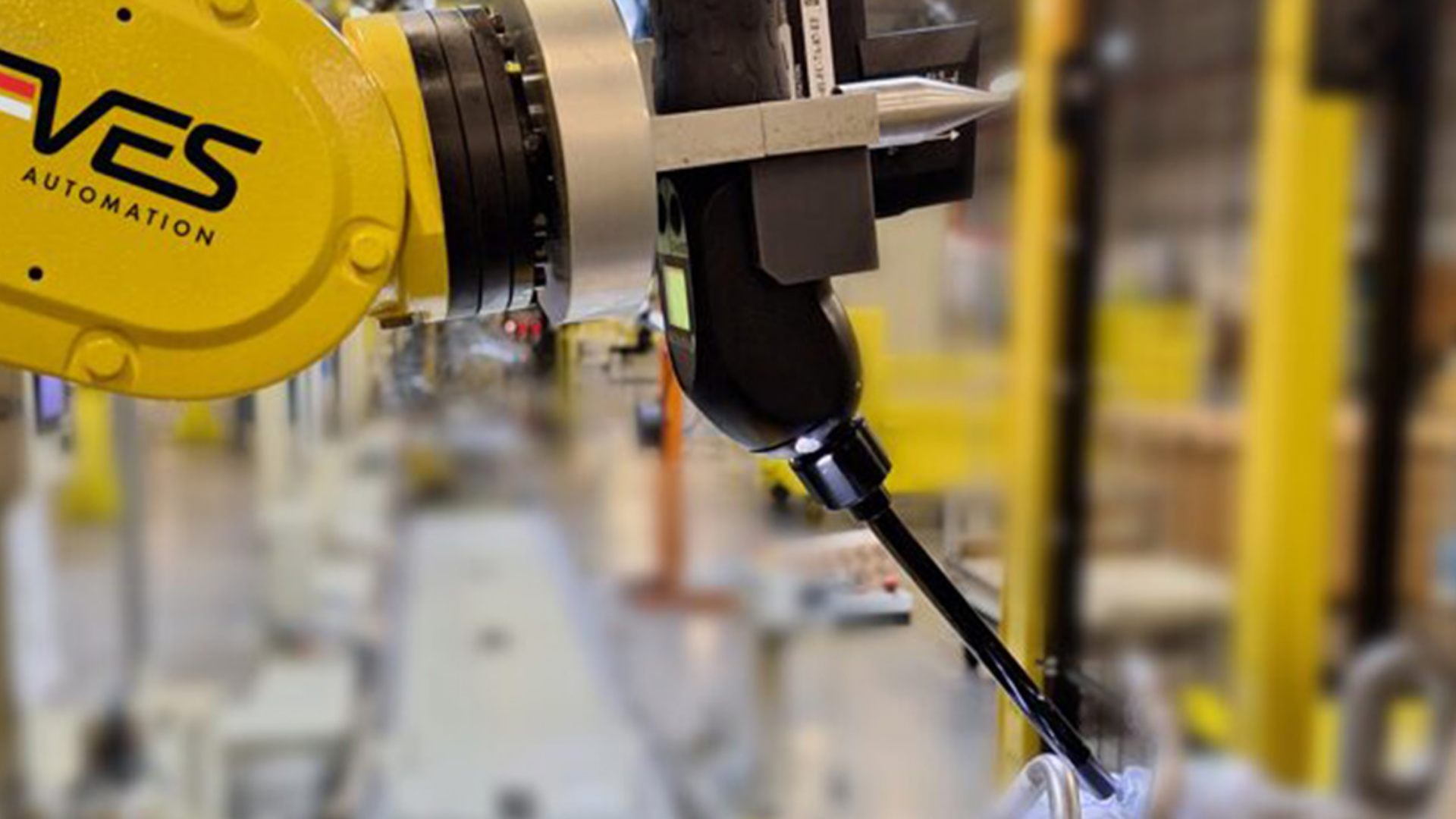
Sniffer testing can help locate leaks on accessible areas of a component. It can be useful for diagnostic work, rework or lower-volume checks, but it may be more operator-dependent than automated chamber-based testing.
Pressure decay, bubble testing or air-under-water methods may be used in some production environments, but they may not provide the sensitivity or traceability required for every HVAC application.
Leak Rates, Refrigerant Containment and Production QA
There is no single leak rate that applies to every HVAC coil. The acceptable limit depends on the component, refrigerant, pressure conditions, customer specification and regulatory environment.
Before specifying a leak test system, manufacturers should confirm:
- The maximum acceptable leak rate.
- The test pressure and operating pressure conditions.
- Whether the test must locate leaks or only provide pass/fail confirmation.
- The required cycle time.
- The component size, volume and material.
- The expected production volume.
- Any customer or market-specific standards.
VES can help translate these requirements into a practical leak testing process. This matters because the leak rate affects the test method, chamber size, pumping requirement, gas handling strategy and automation design.
For more on method selection, see VES helium leak testing systems: helium leak testing systems.
Production Factors: Cycle Time, Tooling and Repeatability
In production, a leak test system has to do more than detect a leak. It has to work reliably with operators, tooling, part handling and line speed.
Key production factors include:
- Chamber or fixture design.
- Part loading and unloading.
- Seal quality and repeatability.
- Product movement through the line.
- Data capture and traceability.
- Calibration and service access.
- False fail and false pass control.
VES custom build leak testing systems around the part and the production process. This helps ensure that the test is not treated as a separate laboratory step, but as a controlled part of manufacturing quality assurance.
When Helium Recovery May Make Sense
For high-volume HVAC coil testing, helium use can become a significant operating cost. Where helium is used regularly and the process is suitable, PURE helium recovery can help recover, repurify and reuse helium from the leak testing process.
Helium recovery is not required for every application. It should be assessed against helium usage, test pressure, gas concentration, production volume and the amount of helium that can be practically recovered.
For more information, see VES PURE helium recovery systems: PURE helium recovery systems.
Speak to VES About HVAC Coil Leak Testing
Talk to VES about your HVAC coil, required leak rate, production volume and cycle time. The VES team can advise on the most suitable leak testing method and whether helium recovery could support your operation.