A helium leak rate describes how much gas can pass through a leak over time. In production leak testing, the acceptable leak rate depends on the product, pressure conditions, safety risk, refrigerant or gas containment needs, and the customer or regulatory requirements that apply to the component.
There is no single universal leak rate standard that fits every part. A leak rate that is acceptable for one product may be completely unsuitable for another. This is why manufacturers should validate the leak rate requirement before specifying a leak test system.
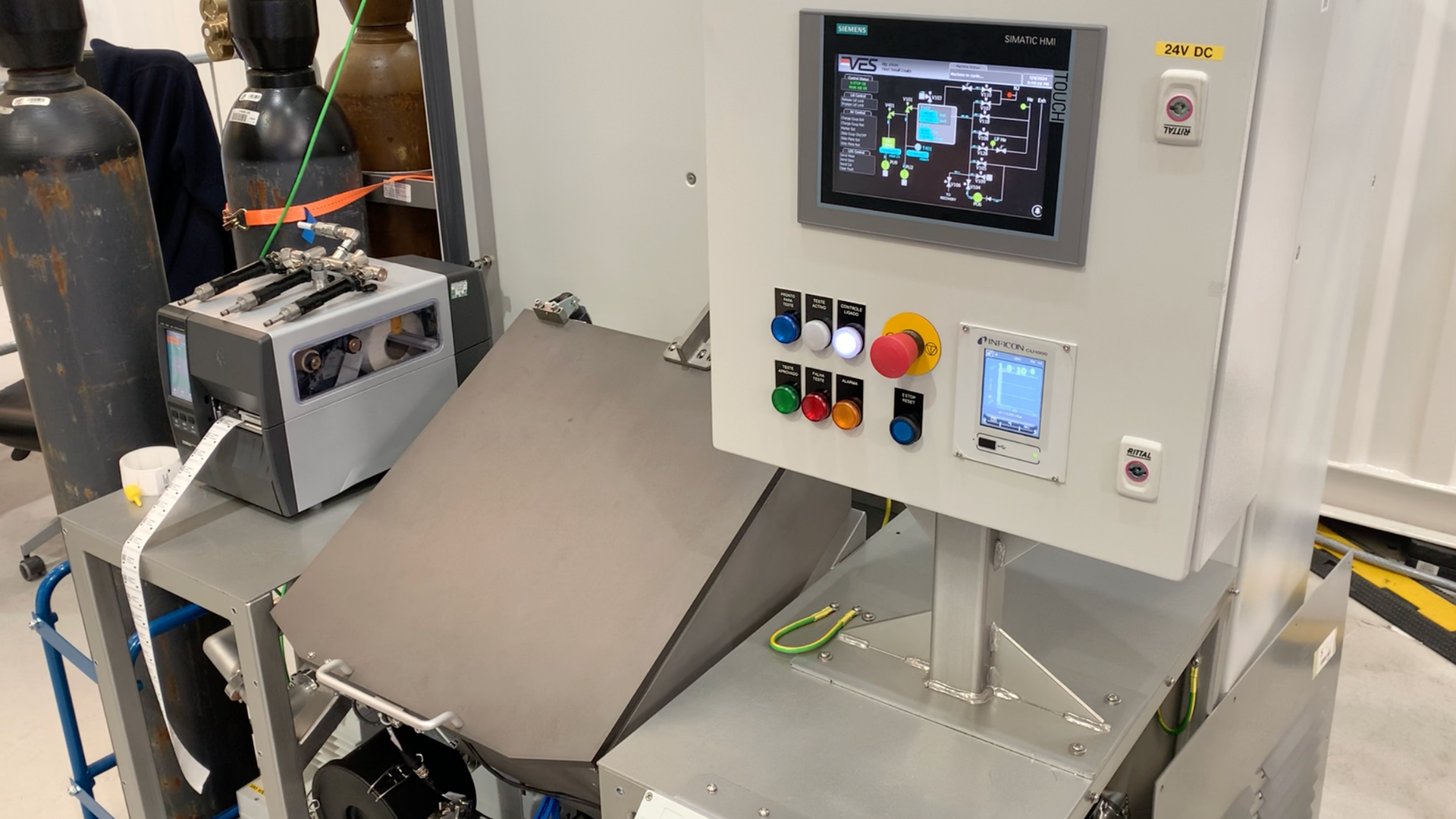
VES designs helium leak testing systems around the required leak rate, part design, production volume and cycle time. See helium leak testing systems.
What Is a Helium Leak Rate?
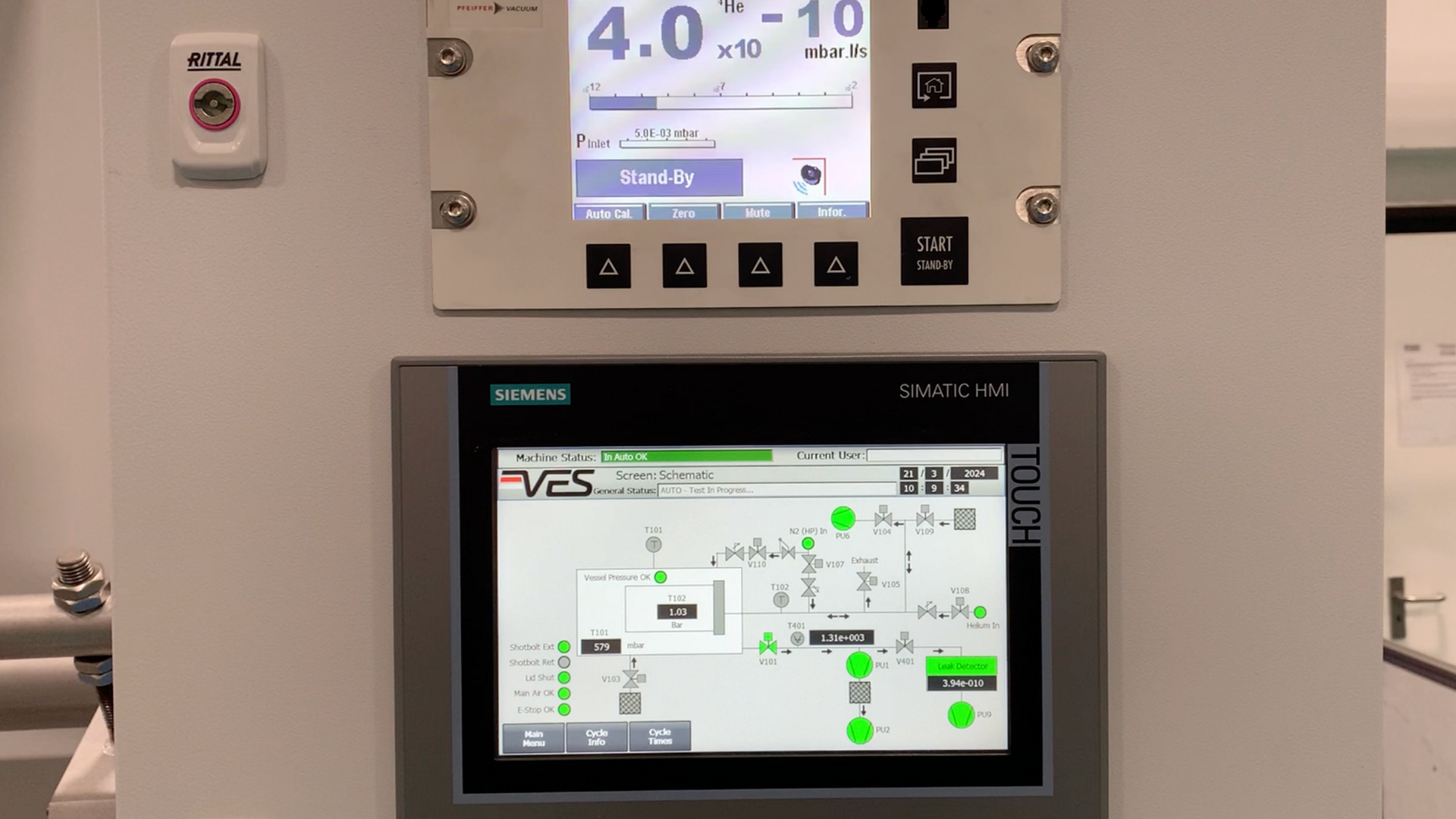
A leak rate is a measurement of gas flow through a leak. It describes how much gas escapes, or enters, over a period of time under defined pressure conditions.
Helium is commonly used because it is inert, light and detectable at very low concentrations. This makes it suitable for sensitive production leak testing where pressure decay, bubble testing or simpler methods may not provide enough confidence.
What Do Helium Leak Rate Standards Mean?
When people refer to helium leak rate standards, they are usually talking about the acceptance limit that a part must meet. This may come from a customer specification, an industry requirement, a regulatory expectation or an internal quality standard.
The standard should define the maximum acceptable leak rate and the conditions under which the test should be performed. Without those conditions, a leak rate value can be misleading.
Important context includes:
- Test pressure.
- Part volume.
- Operating environment.
- Gas or fluid being contained.
- Safety or environmental risk.
- Required production cycle time.
- Measurement units and conversion method.
Common Leak Rate Units Used in Production Testing
Leak rates may be expressed in different units depending on the industry, region and equipment used. Common units include:
| Unit | Typical Use |
|---|---|
| mbar l/s | Common in vacuum and helium leak testing |
| Pa m3/s | SI-based vacuum leak rate unit |
| atm cc/s | Often used in some industrial specifications |
| sccm | Standard cubic centimetres per minute, often used for gas flow |
The unit matters because teams, customers and suppliers may not always use the same language. If values are converted incorrectly, the system may be specified to the wrong sensitivity.
Why Acceptable Leak Rates Vary by Product and Application
The acceptable leak rate depends on what the product must do in service.
An HVAC component may be judged against refrigerant containment and long-term performance. A hydrogen component may have different safety and containment requirements. A medical or clean energy part may need a different level of sensitivity again.
Even within HVAC, the leak rate may vary between coils, hoses, heat exchangers and pressure assemblies. The product design, material, pressure and customer specification all affect the correct limit.
For HVAC-sector examples, see HVAC leak testing systems.
How Leak Rate Targets Affect Test Method Selection
The required leak rate has a direct effect on the leak testing method. If the limit is very low, a highly sensitive helium method such as hard vacuum testing may be required. If the limit is less demanding, accumulation testing or another method may be suitable.
Leak rate targets can also affect:
- Chamber design.
- Pumping speed.
- Test pressure.
- Gas concentration.
- Cycle time.
- Calibration requirements.
- Data capture and traceability.
This is why leak rate should be confirmed early. It is one of the foundations of the system specification.
Leak Rate, Cycle Time and Production Risk
A leak test system must achieve the required sensitivity without creating unnecessary production delays. The more demanding the leak rate, the more important it becomes to balance test accuracy with cycle time and equipment design.
If the system is not specified correctly, manufacturers may experience:
- False fails.
- False passes.
- Excessive cycle time.
- Unnecessary helium use.
- Rework and scrap.
- Poor confidence in test data.
VES design systems around real production conditions so that the leak rate requirement is met in a practical manufacturing environment.
Why Manufacturers Should Validate the Requirement Before Buying Equipment
Before selecting a leak test system, manufacturers should confirm the required leak rate, unit, pressure conditions and test purpose. The system designer should understand what the product is, how it is used, and what failure would mean in service.
VES can help review these requirements and recommend a practical test method. Where ongoing confidence is required, calibration and support should also be considered. See VES calibration services: VES calibration services.
Speak to VES About Leak Rate Requirements
Speak to VES before specifying a leak test system if you need help translating product requirements, customer standards or leak rate limits into a practical production test method.