If you walk through your production floor and see a series of disconnected stations for burst testing, pressure decay, and manual sniffing, you aren’t just looking at a testing line; you’re looking at a logistical hurdle. Every time a part is moved from one rig to another, you’re adding “non-value-added” time. You’re increasing the risk of handling damage, doubling up on operator labour, and creating a data nightmare where results are scattered across different systems.
In high-pressure environments like HVAC coil manufacturing or automotive A/C assembly, floor space is at a premium. Having three machines to do the job of one isn’t just inefficient; it’s a bottleneck that prevents you from reaching your true throughput potential.
The Cost of a Fragmented Line
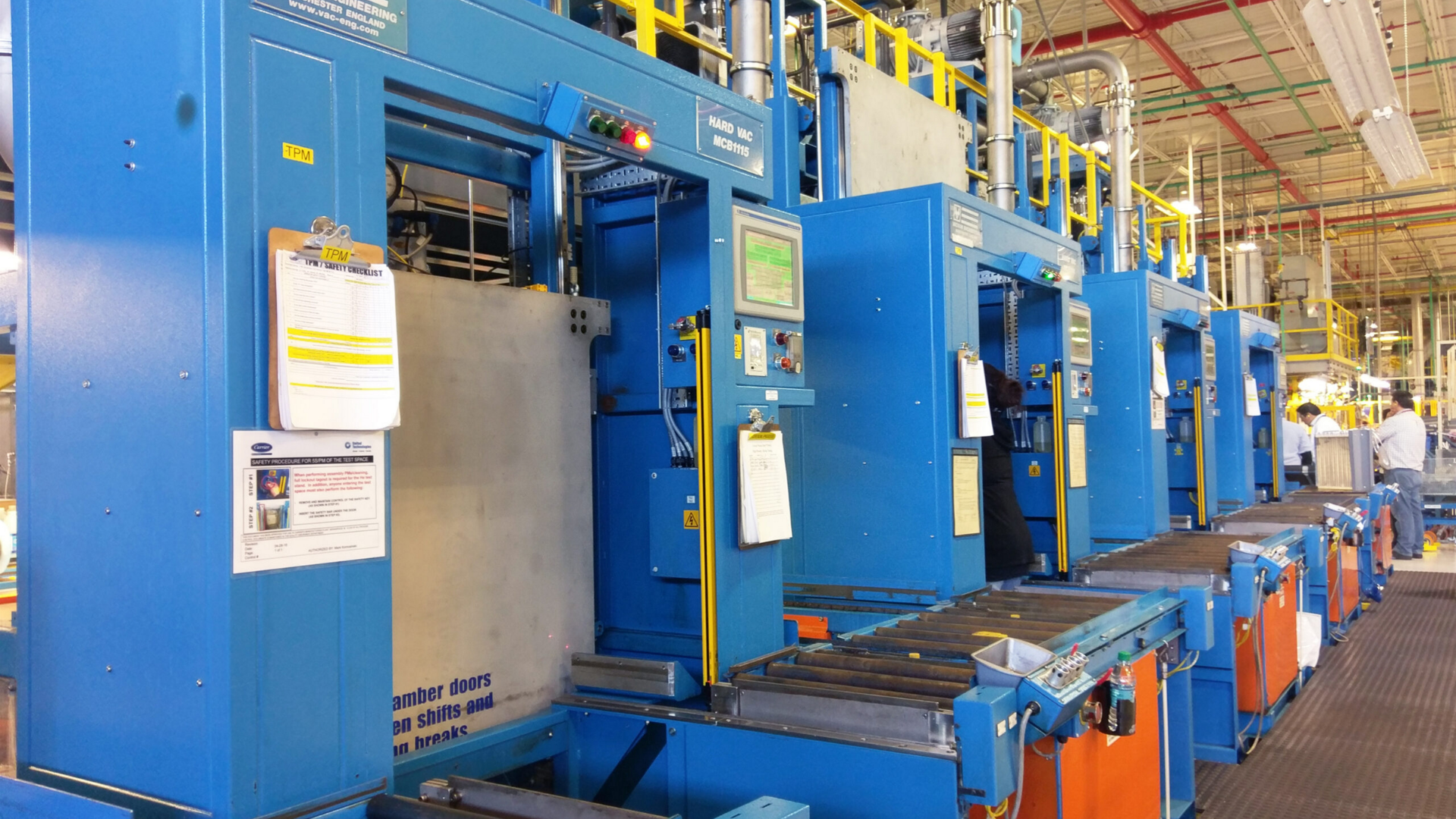
The traditional approach to leak testing has often been “incremental.” As requirements got tighter, manufacturers simply added another station to the end of the line. First, a pressure test for structural integrity, then a dunk tank for a quick visual check, and finally a sniffer probe for fine leaks.
The problem is that this fragmented approach creates massive “hidden” costs. Each station requires its own maintenance schedule, its own training protocol, and its own footprint. Also, if a part fails at the third station, you’ve already wasted the energy and labour costs of the first two. To scale effectively, you need to stop thinking about testing as a series of events and start thinking about it as a single, streamlined process.
Consolidating with Turnkey Systems
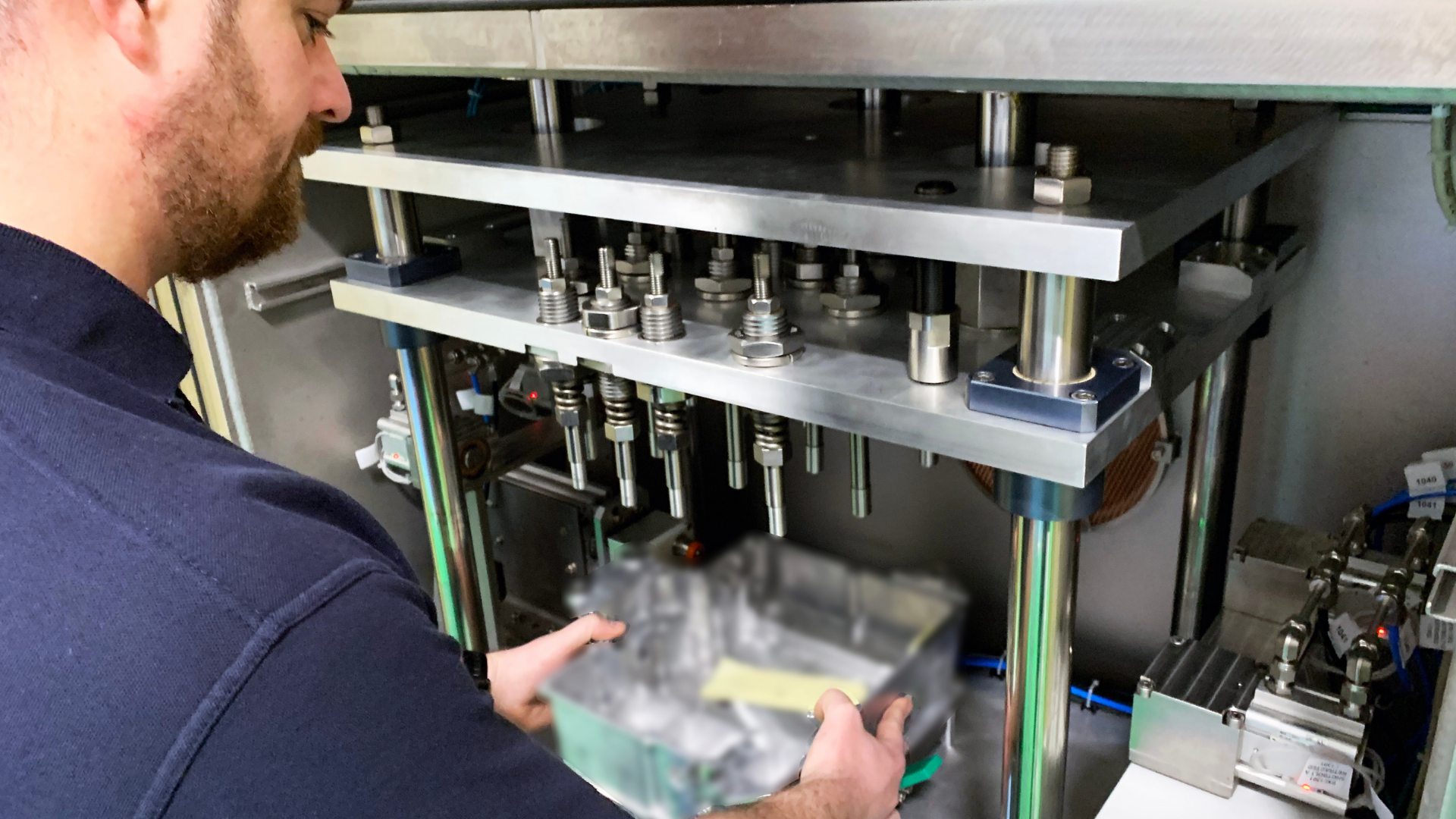
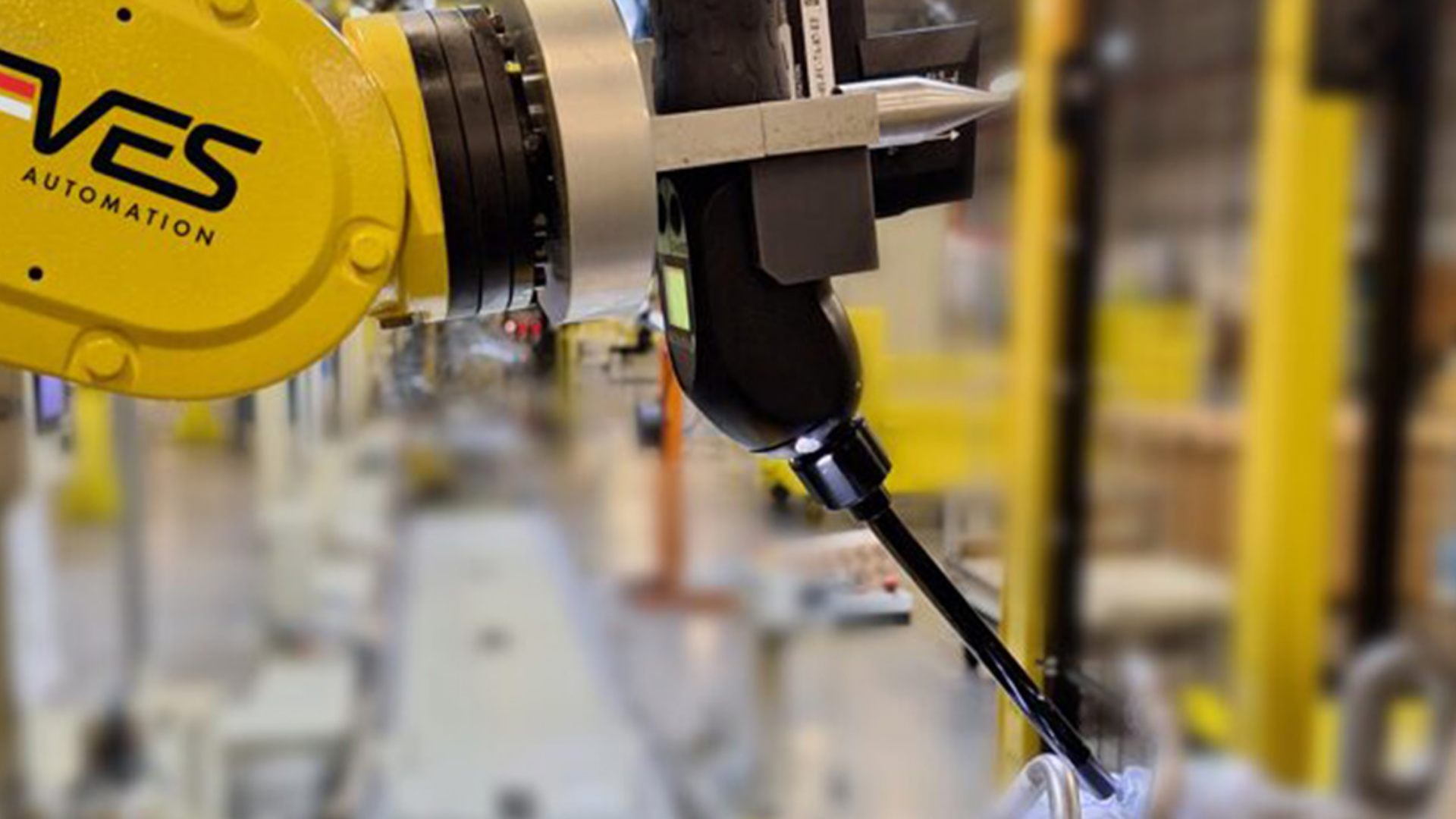
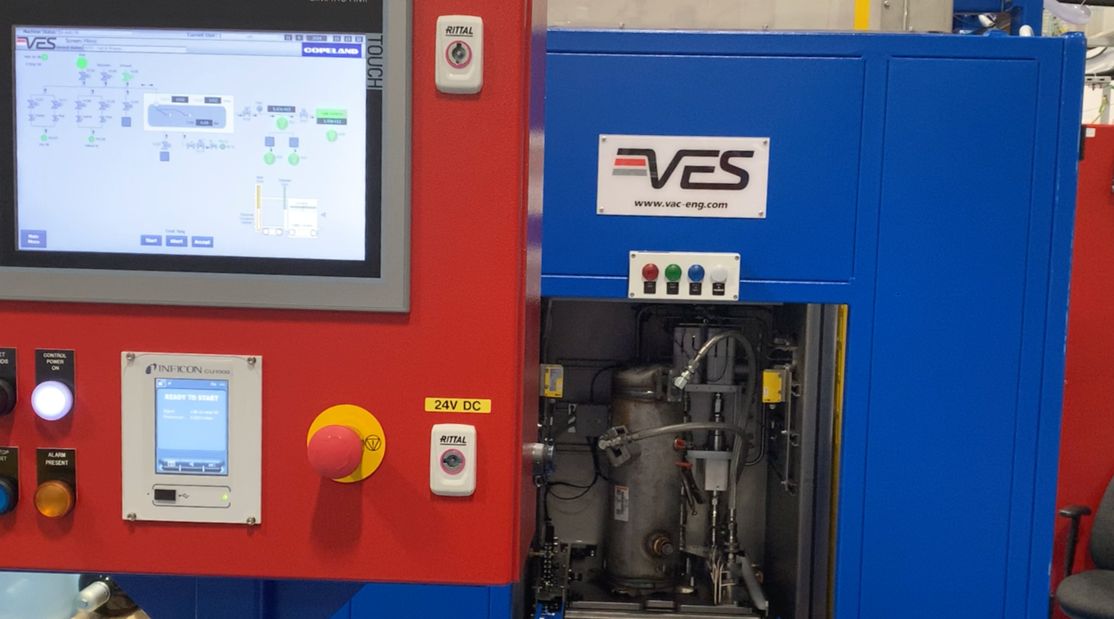
At VES, we specialise in helping manufacturers reclaim their floor space and their schedule. Our philosophy is built on the idea of a “turnkey” solution. Instead of managing three different suppliers for three different rigs, we provide integrated systems that handle the entire cycle, from initial loading and high-pressure structural testing to the final, high-precision vacuum leak test.
Smarter Tech, Smaller Footprint
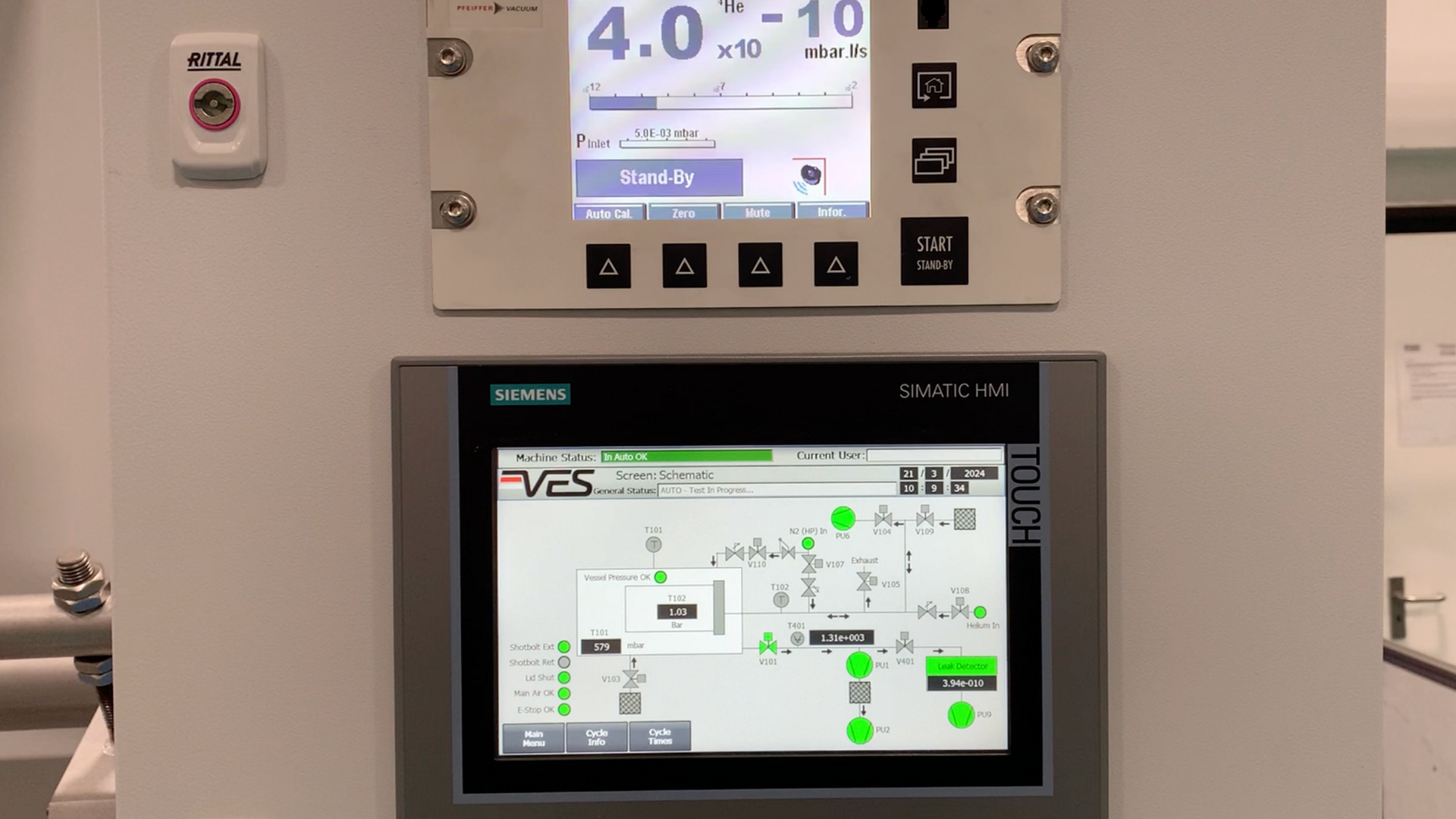
One of the biggest reasons lines become cluttered is that traditional vacuum rigs are simply too big. When we developed our OptVol Technology, we wanted to challenge the idea that high performance requires a massive cabinet.
By optimising the test volume and using a more efficient, lightweight design, we’ve achieved up to a 74% reduction in footprint compared to standard hard vacuum systems. This allows you to integrate a high-performance leak test directly into your existing line flow, rather than having to route parts to a separate testing area. When you combine this with a 92% reduction in power consumption, you aren’t just fixing your speed, you’re fixing your utility bill, too.
Scaling Without the Clutter
If you’re worried that consolidating your stations will leave you stuck if production demands change, that’s where modularity comes in. Our SLEEK platform is designed to be lean from the start but ready to grow. You can start with a compact, value-engineered single-chamber unit that fits into tight legacy plants. As your volumes increase, you can add a second chamber or upgrade to finer sensitivity (like the LDS3000-ready option) without needing a whole new footprint.
This modularity ensures that as you grow, you aren’t just adding more “stuff” to your floor, you’re adding capability. You maintain a clean, organised, and efficient workflow that allows your team to focus on production rather than moving parts between stations.
Reclaim Your Production Flow
A slow testing line is a symptom of a system that has outgrown its original design. Whether you are dealing with the safety risks of CO2 systems or the high-throughput demands of residential HVAC, the solution is the same: simplify and consolidate.
We’ve seen firsthand how moving to a single, integrated VES station can transform a factory’s output. We’d love to help you map out your current floor layout and show you exactly how much space and time you could reclaim by consolidating your test stations.